
Module 1: Developing a Profitable Pricing Structure
Why the Shop Rate Matters
For any business that fabricates or produces a product in-house, the shop rate is one of the most important numbers in your pricing. It represents the true hourly cost of keeping your production operation running — not simply what you pay the person doing the work. For a drapery workroom, upholstery shop, cabinet shop, or other fabrication business, knowing your shop rate helps answer a fundamental question: what does it actually cost the business for one hour of productive fabrication time?
A properly calculated shop rate lets you build all your costs into every product you fabricate. A common misconception is that the shop rate is simply a fabricator’s hourly wage — it isn’t. The rate includes all the costs of providing the equipment, facility, insurance, administration, and other infrastructure that make that hour of production possible and keep the business open.
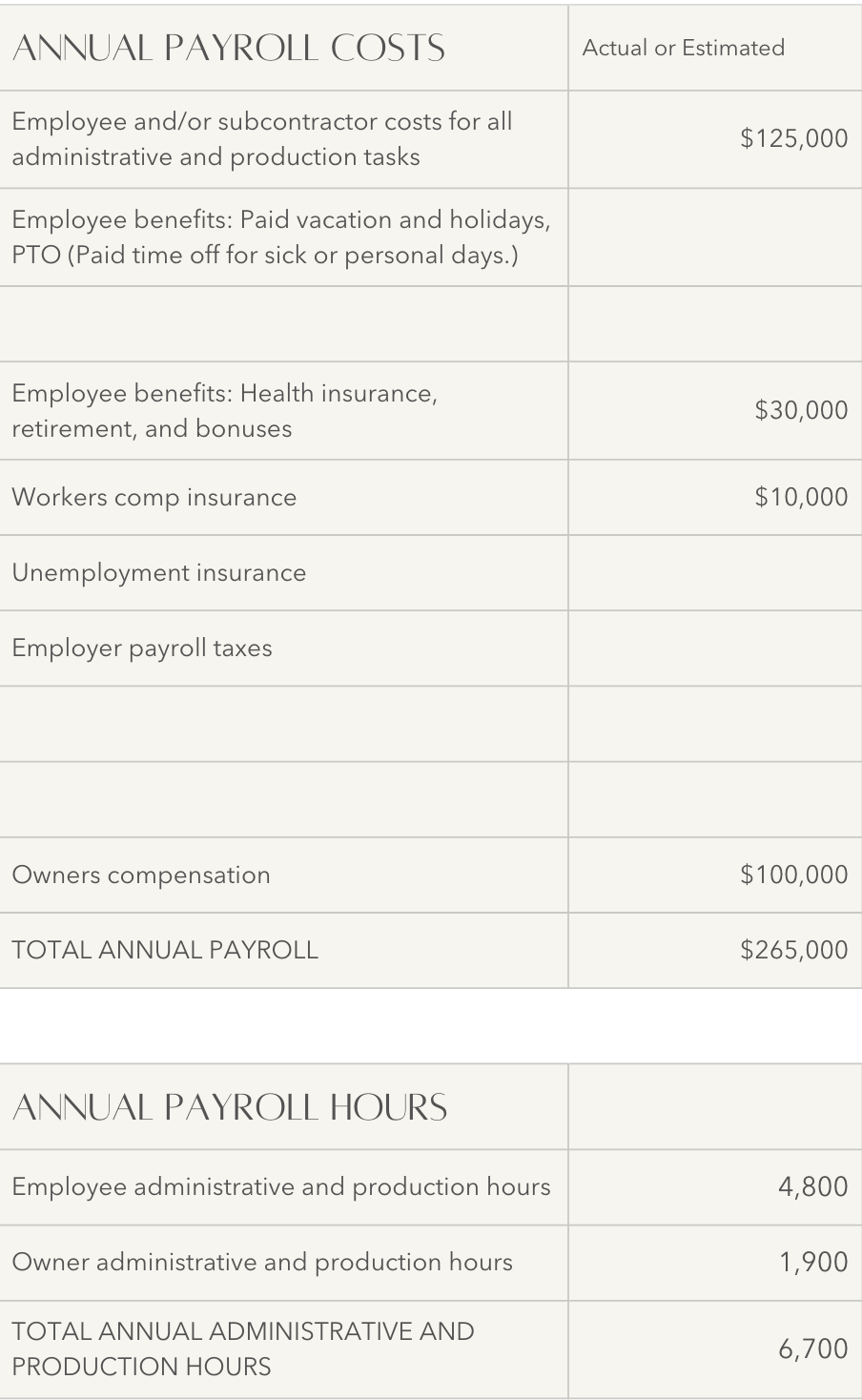
For example, suppose your annual overhead, operating, and payroll costs attributable to the shop are $335,000, and the shop has 6,700 production hours available during the year:
$335,000 ÷ 6,700 productive hours = $50/hour base shop cost
Once you know this number, you can run a time study, determine how many productive hours a job requires, multiply those hours by your shop rate, add material and other direct costs, and then apply your desired profit structure. The next lesson walks you through pricing individual products and services — but you need your shop rate first.

What Counts as a Business Expense
This is the overhead needed to operate your workroom, along with any other overhead expenses not charged to a specific job. It includes rent, utilities, insurance, equipment and fixture purchases and maintenance, workroom tools and supplies, vehicle expenses, trade education, bank fees, marketing, your website, computers and software subscriptions, accounting and legal fees, travel, and more.
One important distinction: direct job costs generally shouldn’t be buried in the shop rate if they’re already charged to the individual project. Fabric, lining, hardware, trim, freight, outsourced services, and similar costs are usually better assigned directly to the job — otherwise, you risk counting them twice.
Sample: Annual Business Expenses — Workroom Shop Rate Calculation template
What Counts as Labor
Production labor should include employee or subcontractor hourly wages for producing the products you sell. Tasks covered during these hours include calculating, cutting, sewing, ironing, packaging, and installing product.
Labor costs also include administrative, sales, and marketing tasks — such as sales calls, site visits, procurement, project management, bookkeeping, quoting, drive time, and communication (email, text, phone calls) — as well as the total hours owners work in the business.
Also include non-productive employee benefit costs, such as employer payroll taxes, workers’ compensation, unemployment insurance, employer-paid health insurance, retirement contributions, paid vacation and holidays, sick time, bonuses, and other employee benefits.
Your annual labor hours are simply the productive hours behind those dollars — the time employees, subcontractors, and owners spend on administrative, sales, marketing, and fabrication tasks. This does not include hours of paid time off for vacations, holidays, sick days, or personal days.
Sample: Annual Payroll Costs & Payroll Hours — Workroom Shop Rate Calculation template
What to Leave Out
Cost of goods sold is not part of the shop rate calculation. If you purchase an item and resell it for a specific job, charging it to that project, it doesn’t affect your shop rate — it’s a separate income stream with its own profit structure. Fabric, lining, hardware, trim, freight, outsourced installation services, and similar costs are usually better assigned directly to the job or product. A future lesson brings cost of goods sold into the pricing equation for each product or service you sell.
Do the Math
Your breakeven shop rate formula is:
Base Shop Rate = (Expenses + Payroll) ÷ Production Hours
This shop rate is your cost-recovery number. If your calculated shop rate is $50/hour, charging customers $50 for an hour of fabrication may cover your projected expenses, but it will leave little or no actual profit. Your pricing system needs an additional profit component, or markup — typically a 2x markup on your breakeven shop rate will give your company room to turn a profit.
Now it’s your turn. Here’s the second page is the blank Workroom Shop Rate Calculation template — fill in your own numbers on each side:
Includes a pre-filled sample and a blank template: