Lesson 1
Fabric width refers to the measurement of the fabric from selvage to selvage. This information is critical to calculating yardage requirements for a project. Depending on where the fabric is from, it may be listed in inches or centimeters.
The listing may include the full width of the fabric and the usable width. Usable width refers to the patterned part of the fabric; the unusable selvages may be part of the total width.
Here is an example of a fabric with a width of 53.5" and a usable width of 52.75". It also informs you there is a 10.5" border on one side. So if you want to cut off the border you would only have 42.25" of usiable width of the main pattern.
Vertical and Horizontal Repeat
Repeats refer to the measurement from a pattern point on a motif to the point where that same motif repeats again, measured horizontally or vertically.
This is important information when yardage is being calculated, as different repeats will need different amounts of yardage for the same treatment. Take note if the Vendor has listed the repeats in inches or centimeters. Use an inches to centimeters calculator you can find online to convert if needed.
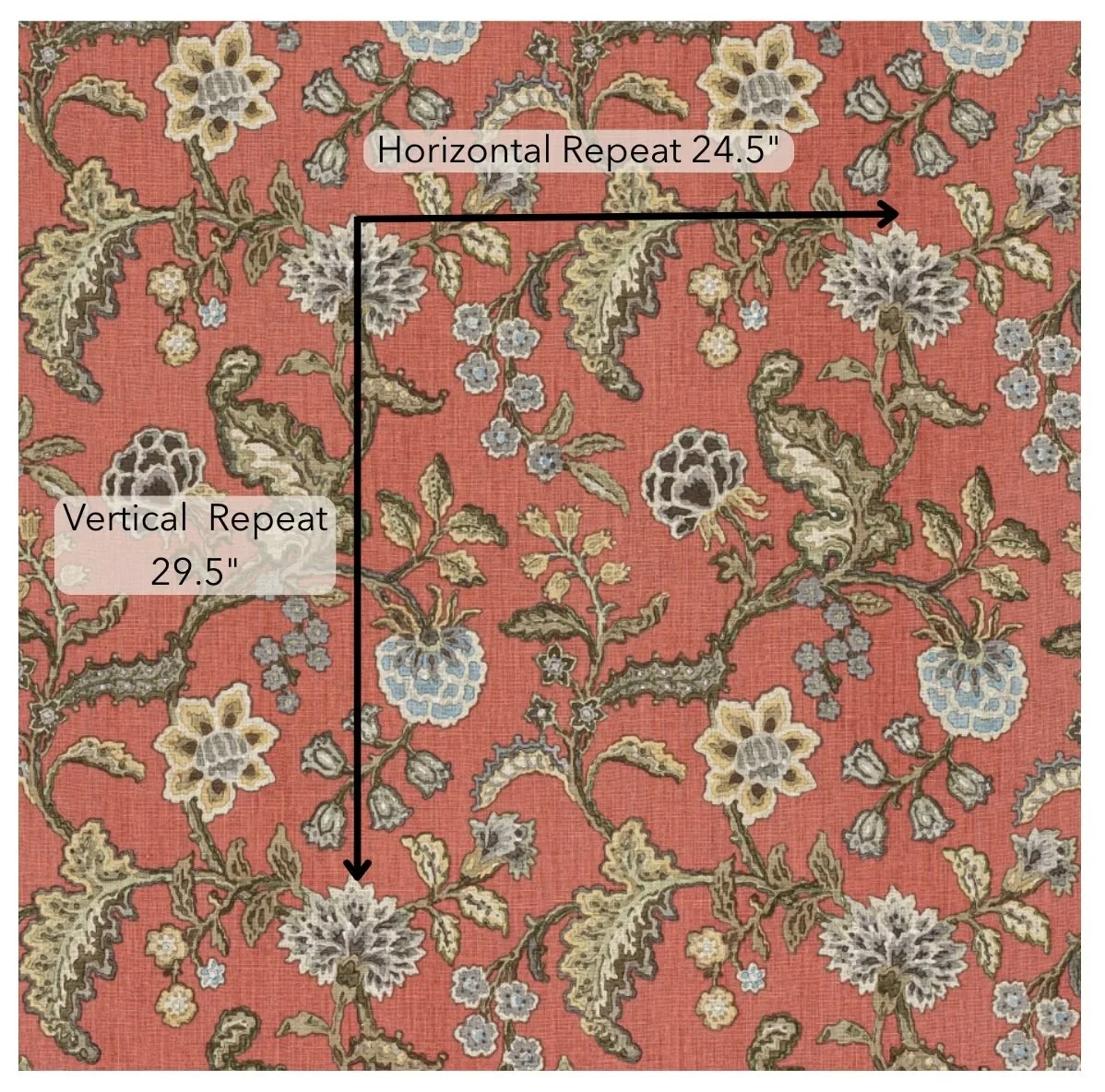
Straight match
This is a straight match where the repeats can be matched up straight across the width.
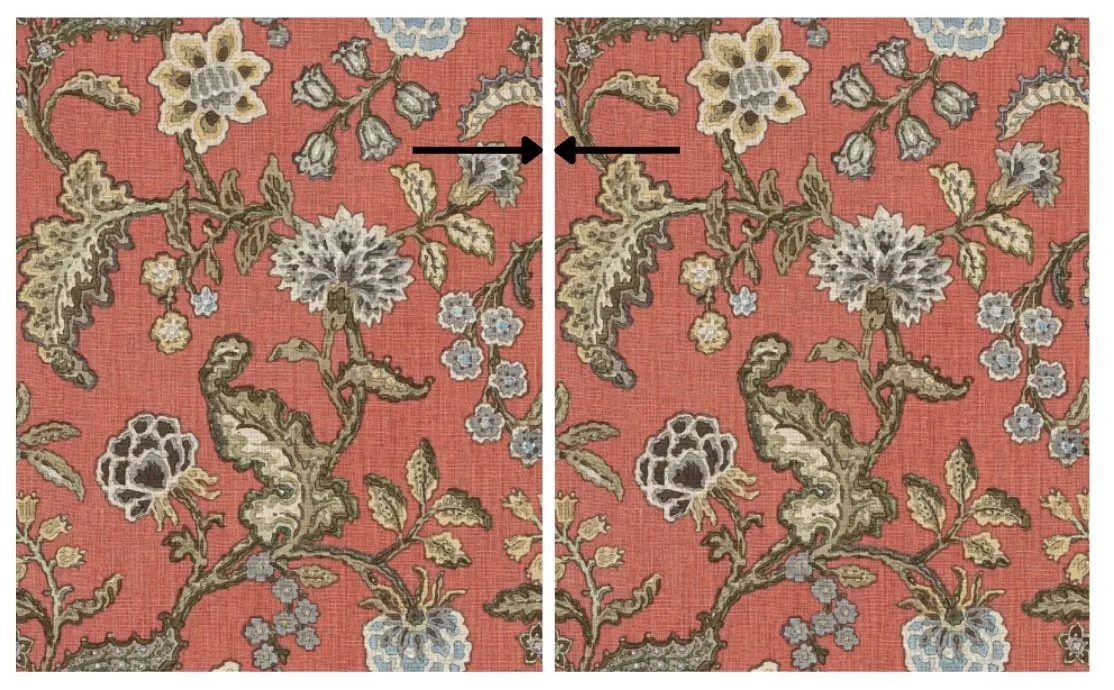
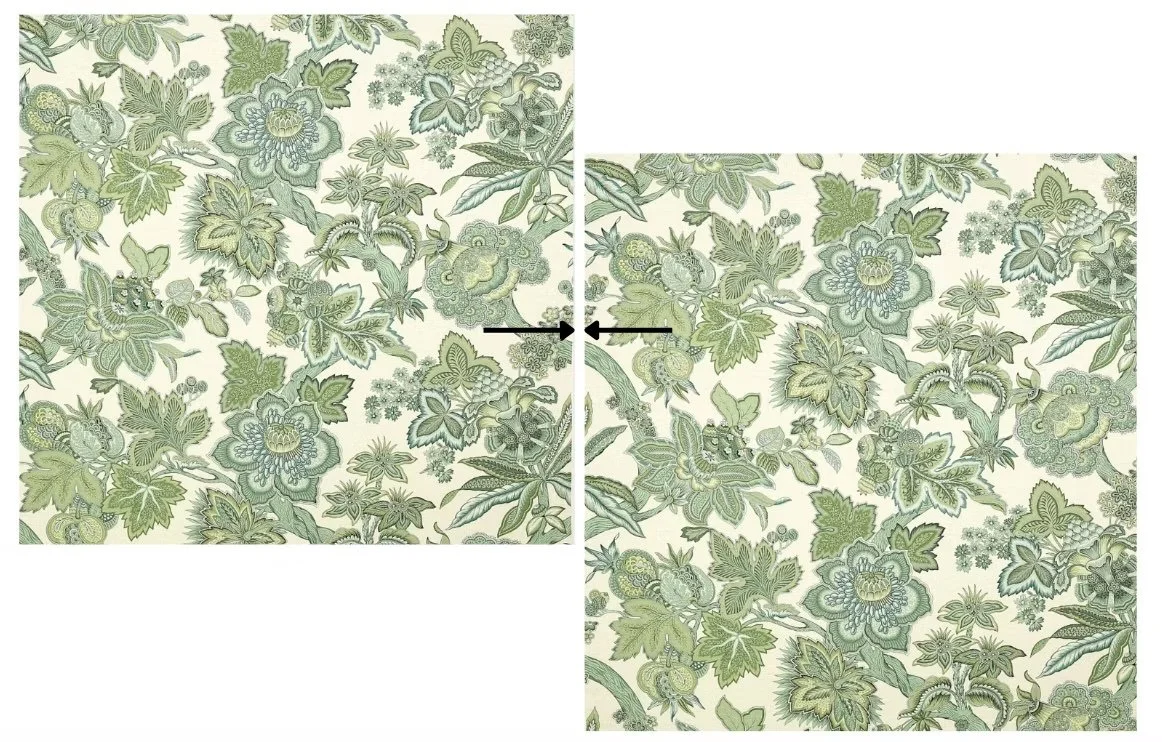
Drop Match
This is a drop match where the pattern moves down ½ of a repeat to make the pattern match. This is important to know when calculating fabric as it will require more yards.
Railroaded or Up the Bolt
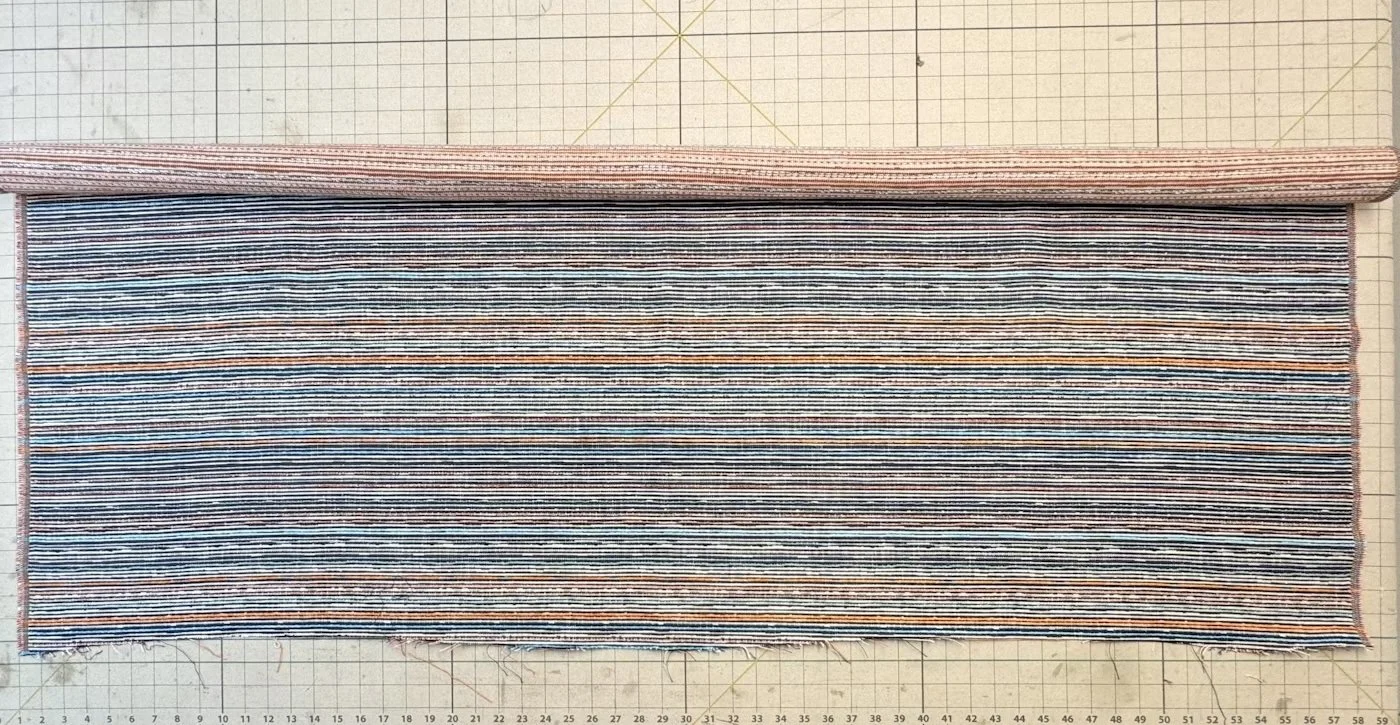
Fabric is used up the bolt where the selvages run vertical. If a product such as a cushion cover, drapery, shade or valance are wider than the fabric width the widths will have to be sewn together with the seams showing vertically on the face. In this example the stripes will run horizontally.
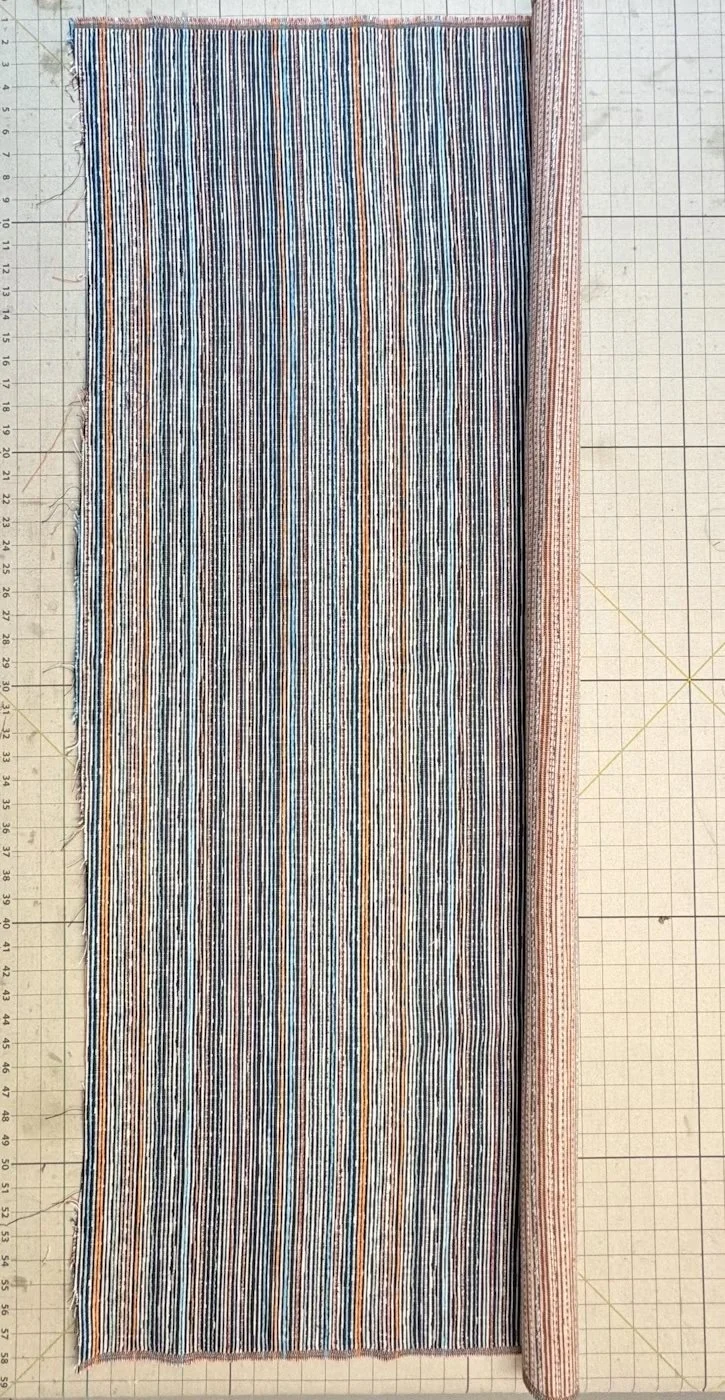
Fabric is used railroaded where the selvages run horizontal. Used this way a cushion cover or a valance will have no face seams. Wide width drapery fabric, 118" or more, will also have a continuous panel with no seams. In this example the stripes will run vertically.
Fiber content
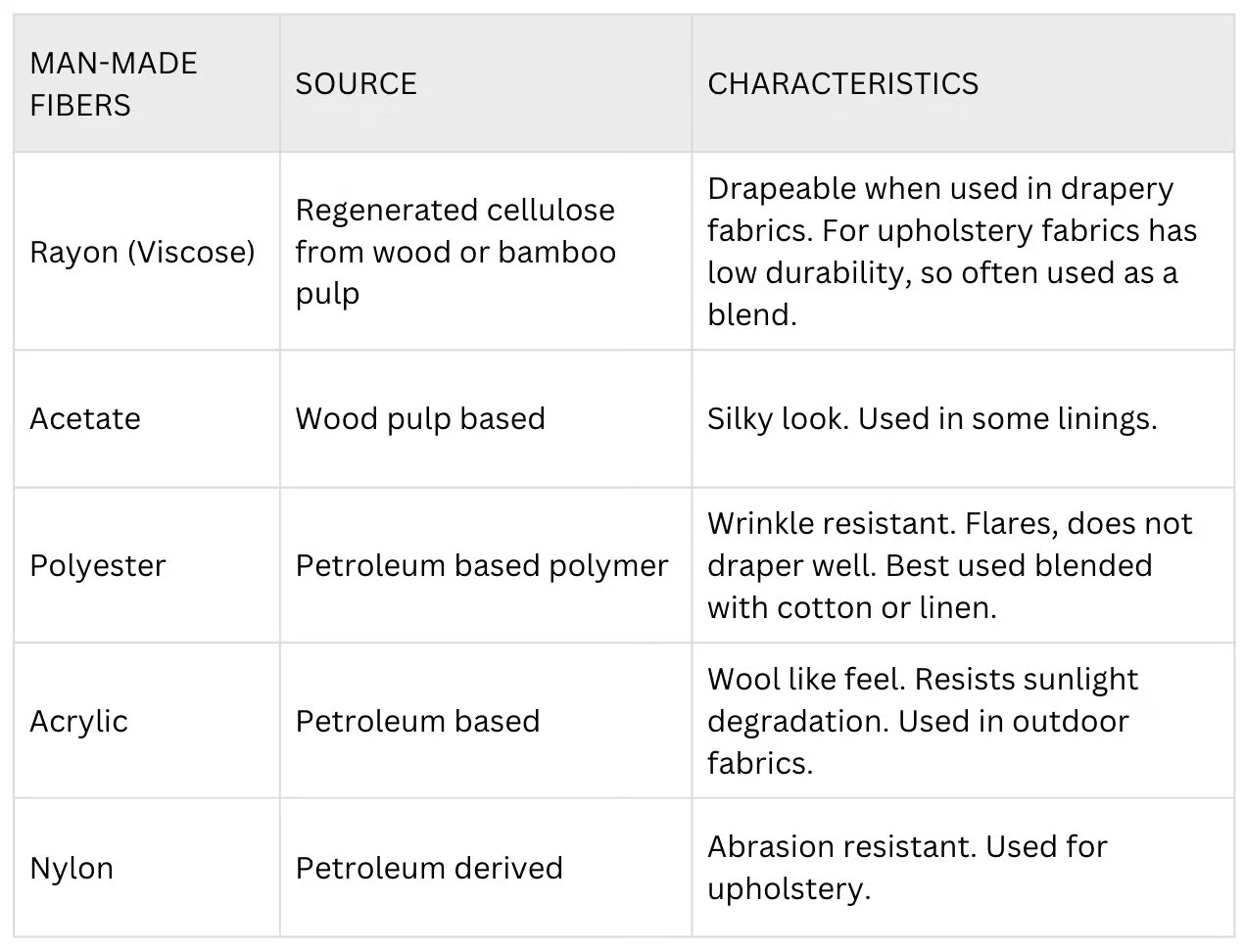
Fibers used in fabrics mostly fall into the categories of natural or man-made fibers. Knowing the fiber content can give you information about how the fabric will perform.
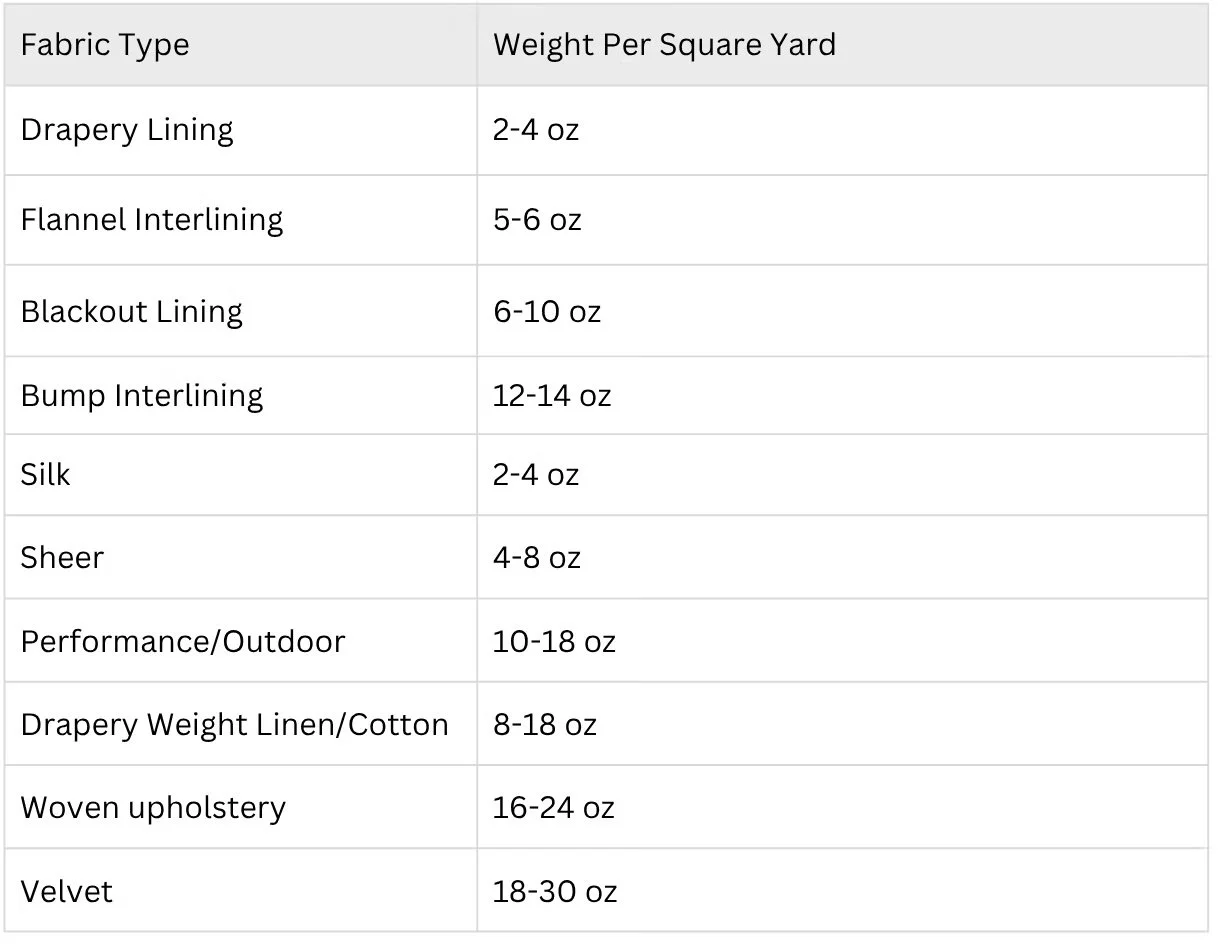
Weight - Ounces per linear yard
Knowing the relative weight of the fabric will help you determine if it is suitable for your end use. Here is a chart with the typical weights for each fabric category.
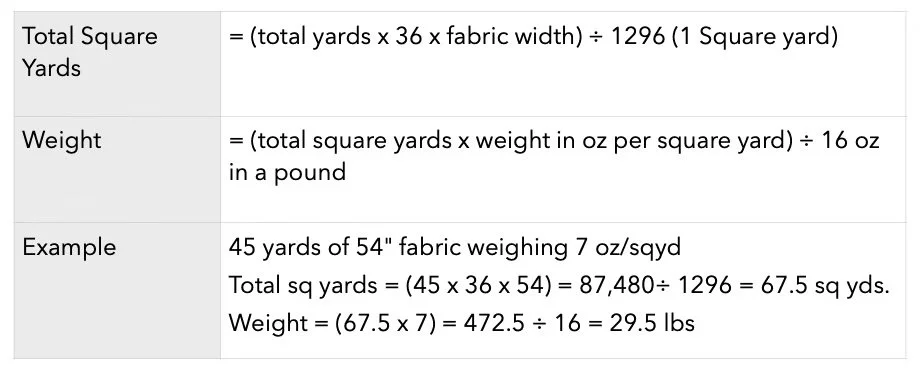
You may need to know the total weight of a product for some reason. A common reason is for motorized treatments to determine the strength of the motor needed to move the finished product. Here are the formulas for figuring this information.
Drapery or Fabric Shade Weight Calculations
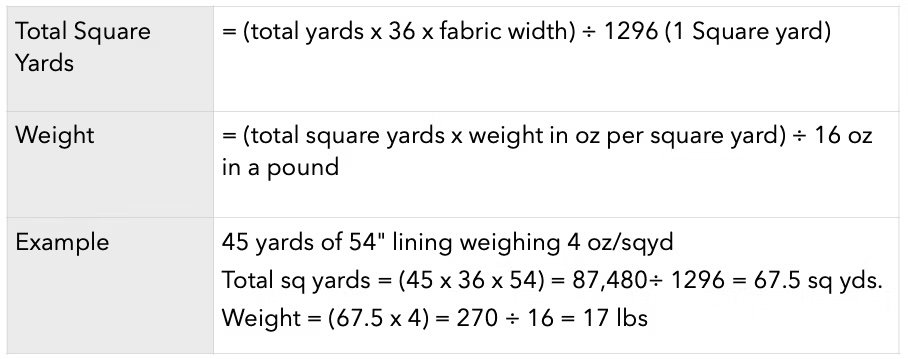
Lining Weight Calculations
Abrasion - Double rubs
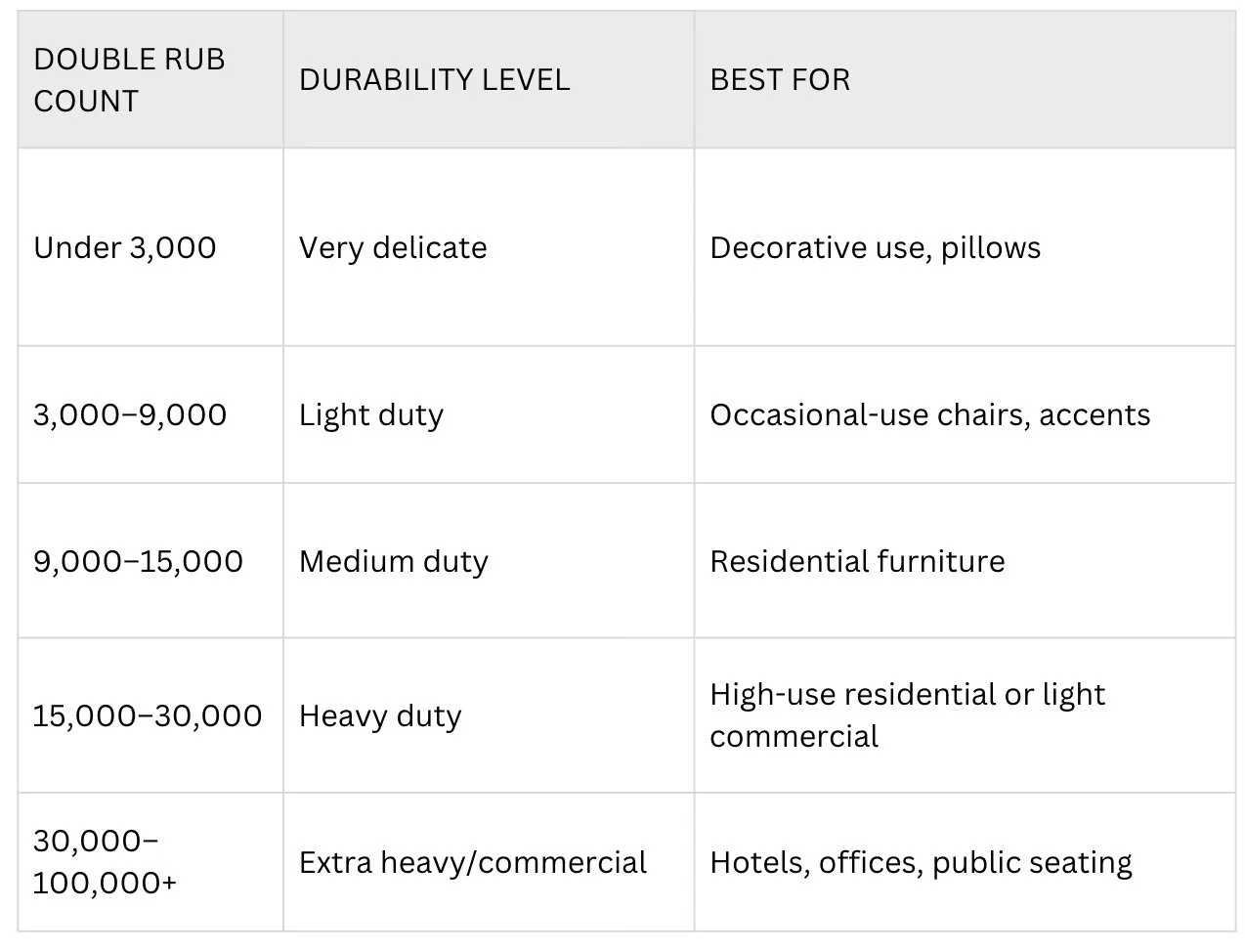
To determine how well a fabric can withstand wear and tear from repeating use like sitting or rubbing a double rub test is performed.
One double rub = one back-and-forth motion (like someone sitting down and getting up).
The test is done using a mechanical arm on a machine, usually the Wyzenbeek or Martindale tester, depending on the standard.
Fabric is rubbed until there is noticeable wear, such as thread breaks or pilling.
Backing
Fabrics intended for upholstery use are best with an added backing. The benefits include: Adding structure, preventing fraying, increasing strength and stability.
Acrylic Backing - This can strengthen lightweight fabrics to make them more appropriate to be used on upholstery. It adds structure to prvent unraveling and fraying. It is durable, but can make the fabric stiff.
Latex Backing - This is a heavier backing made with natural rubber or synthetic latex. It adds grip, increases durability, and provides dimensional stability. It can degrade over time.
Knit Backing - This is a knit fabric laminated to the back. it can be used for upholstery fabrics to keep the fabric from sagging or shifting. It can also be used for loose weave drapery fabrics to add some stability.
Fusible Stabilizer - This can be applied by the workroom during the fabrication process. A 100% light polyester lining is ironed on the fabric to stabilize flimsy or loose weave fabrics. It makes the fabric easier to sew with no puckering of these lightweight fabrics. It does not alter the stiffness of the fabric.
End Use
Fabric Vendor specifications will often include recommendations for how the fabric is to be used. If it only lists drapery, that fabric should not be use for upholstery. If it only lists upholstery that fabric should not be used for drapery. If it says multipurpose the fabric can be used for either.
Country of Origin
When a country of origin is listed, it does not necessarily mean that the entire product was made entirely in that country. According to US Customs and International Trade Rules, the country of origin is assigned based on the country where the fabric underwent its last substantial transformation. For example, afabric labeled "Made in Italy" may have been woven in Italy, but the fiber could have originated in China and the yarn cold havev been spun in India.
Cleaning Codes
Cleanings codes inform you as to the best way to clean a particular fabric. There are no guarantees of the cleaning abilities of these methods. The most often seen codes are W,S,WS,X.
W - Professional Dry Cleaning is Recommended with water based solvents.
S - Professional Dry Cleaning is recommend with petroleum based solvents.
WS - Professional dry cleaning is recommended with water or petroleum based solvents.
X - Use vacuuming only to clean up dust and dirt particles. No water or petroleum based solvents are to be used.
Flammability - Fire Codes
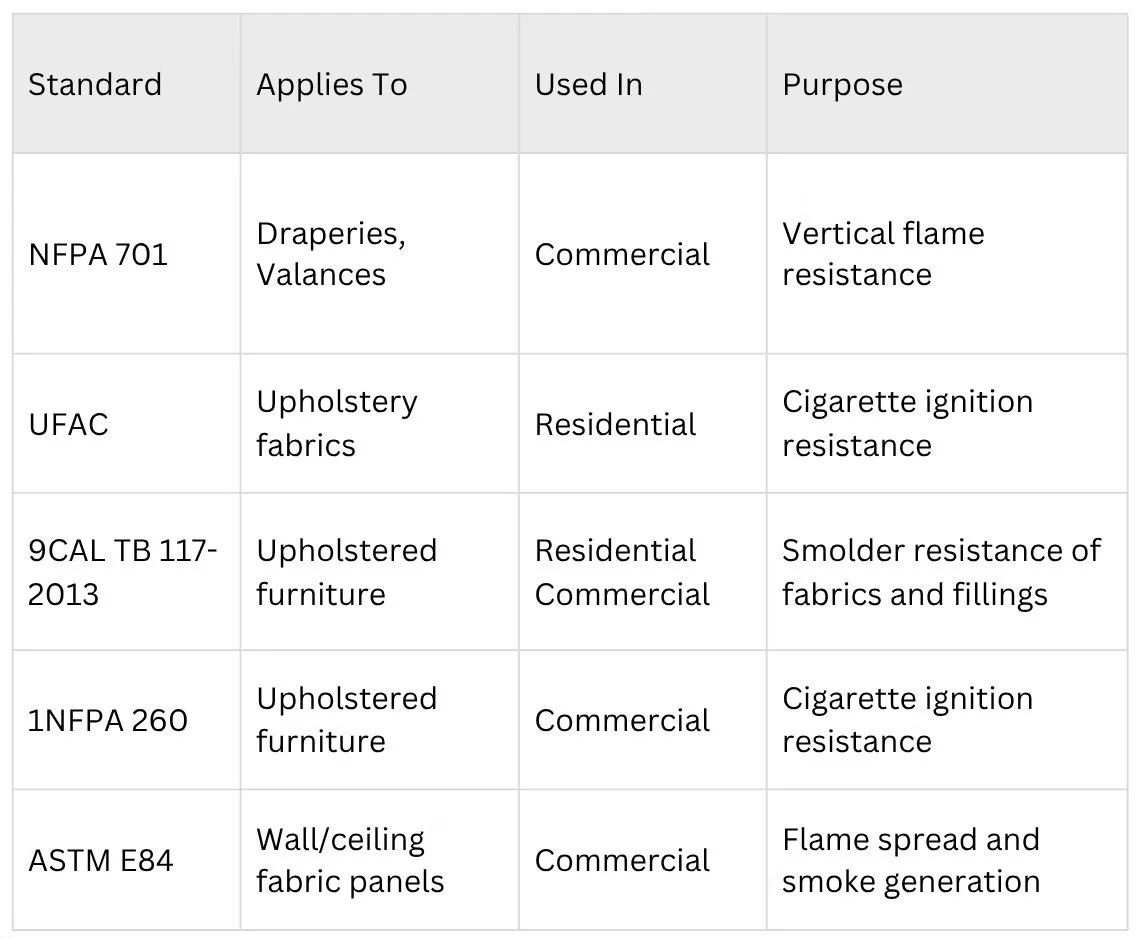
Flammability codes for home decor fabrics are primarily guided by federal and state regulations, along with industry standards. These standards help determine how fabrics behave when exposed to fire. Here are the most relevant flammability codes and tests for home décor fabrics in the U.S.