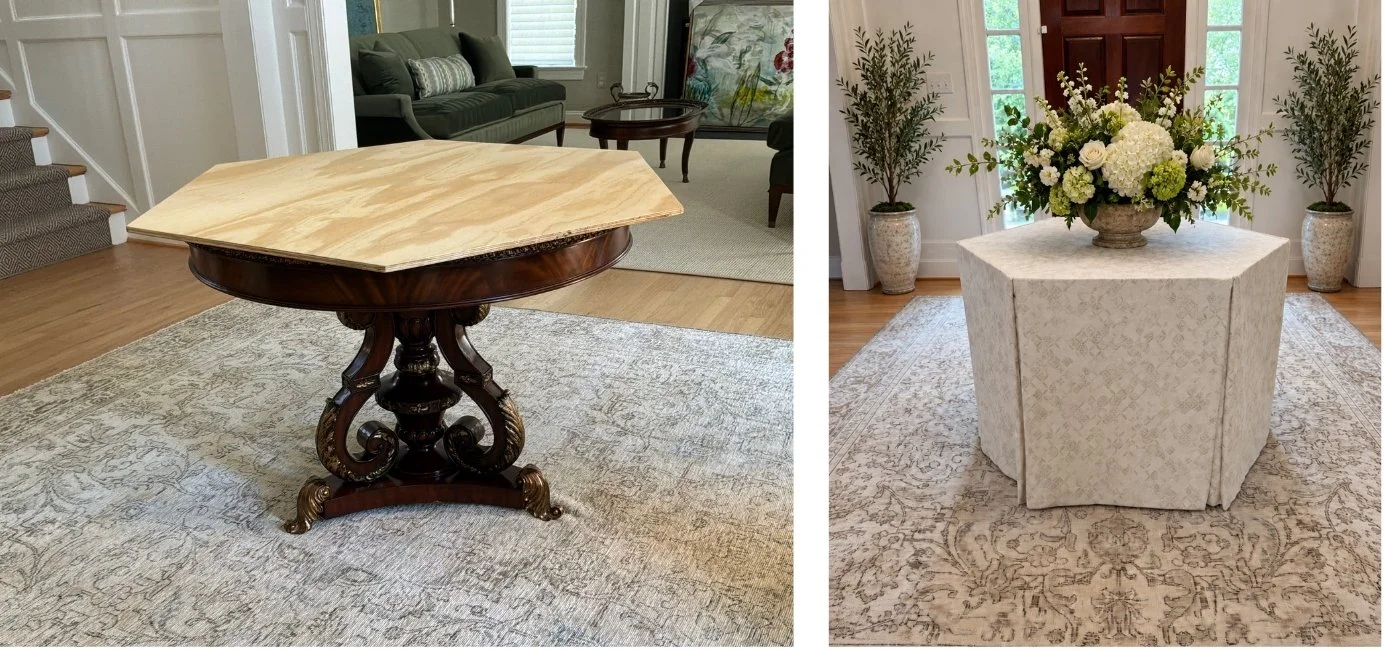
Fabric-draped tables are a wonderful example of how textiles can transform an ordinary piece of furniture into a distinctive design element. Whether referred to as tablecloths, table covers, table skirts, or draped tables, these versatile furnishings offer far more than a decorative covering. They introduce softness, color, pattern, texture, and a sense of tailored elegance to an interior.
Once a hallmark of traditional decorating, fabric-covered tables are equally at home in contemporary, transitional, and eclectic interiors. With thoughtful fabric selection, proportion, and construction, they can become an understated accent or a memorable focal point.
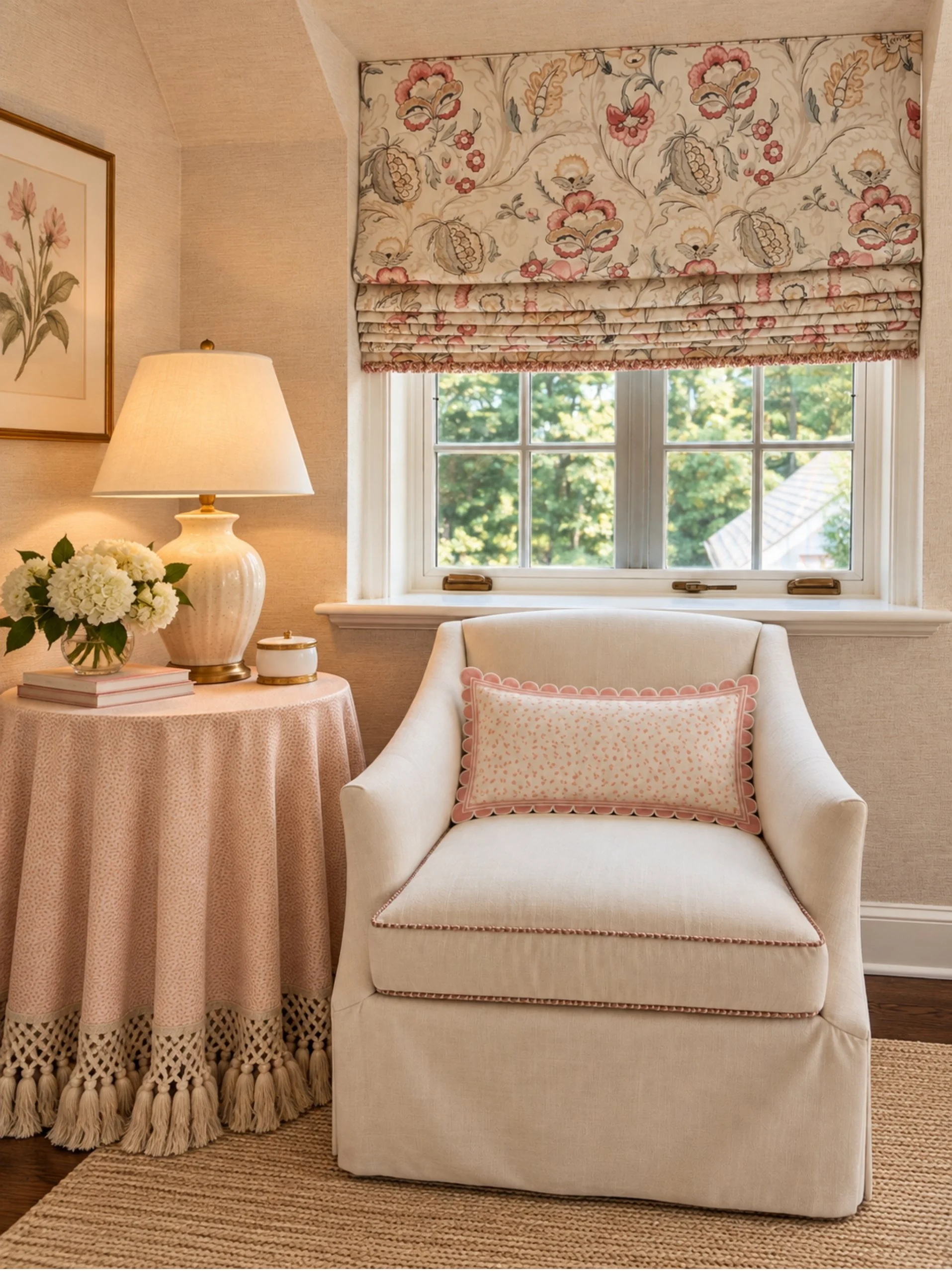
The draped Table
As interiors swing back toward a more traditional approach, our workroom has recently fabricated many styles of fabric-draped tables. Some of the reasons they are currently reemerging in interior design follow.
1. They soften a room filled with hard surfaces
Many interiors feature an abundance of wood, stone, glass, and metal. A fabric-draped table provides a welcome contrast, softening the visual lines of the furniture and introducing a more inviting, comfortable atmosphere. The gentle folds and movement of fabric bring warmth to a space that might otherwise feel overly structured. They can soften not only the look, but also the sound of a room with more sound-absorbent fabric surfaces.
2. They introduce color, pattern, and texture
A draped table offers another opportunity to incorporate beautiful textiles into a room. It can repeat a pattern from a pillow, coordinate with window treatments, or introduce a contrasting print that adds visual interest. Fabrics with distinctive weaves, embroidery, or subtle texture bring depth and richness to the design. Depending on the textile and styling, they can feel romantic, tailored, playful, sophisticated, or quietly luxurious.
3. They turn functional furniture into a design feature
A simple, inexpensive table can become an elegant bedside table, living room accent, or decorative pedestal with a beautifully fitted fabric cover. The underlying furniture does not need to be elaborate or expensive. The textile becomes the feature, allowing the designer to create a custom look without investing in an entirely new piece of furniture.
4. They conceal storage and everyday necessities
One of the most practical benefits of a floor-length table cover is the hidden storage beneath. A draped table can discreetly accommodate baskets, books, supplies, or other items while maintaining a polished appearance. This makes it particularly useful in bedrooms, reading nooks, home offices, and smaller living spaces.
5. They offer endless opportunities for customization
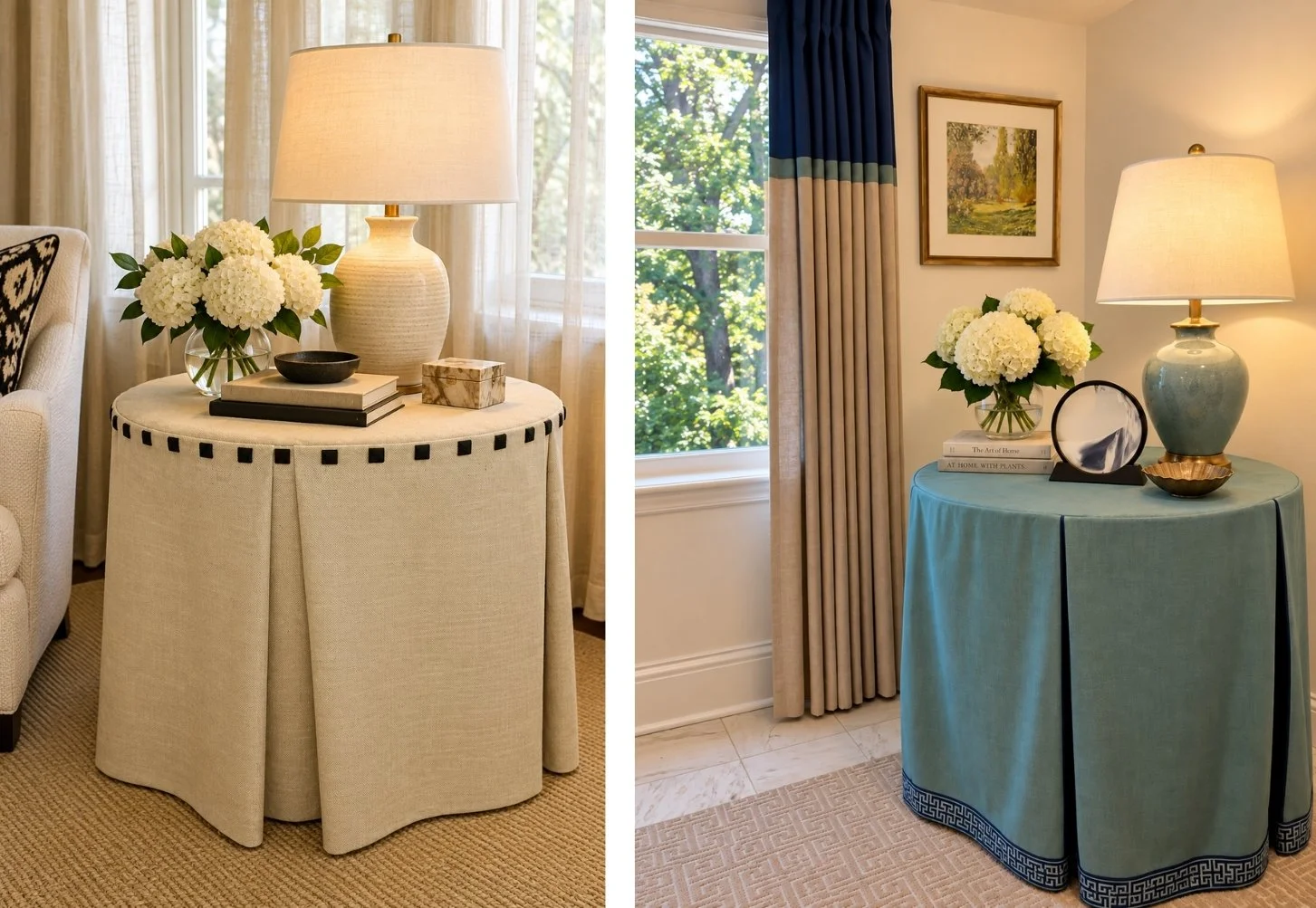
Unlike manufactured furniture, a custom fabric table cover can be designed to precise specifications. The designer can select the fabric, determine the finished length, control the fullness, and incorporate decorative details such as contrast banding, piping, pleats, scallops, or applied trim. These details can coordinate with other custom soft furnishings for a cohesive interior.
The Versatility of Fabric-Draped Tables
One of their greatest strengths is their ability to adapt easily to different locations and functions.
Entryways and Foyers
Create an inviting first impression with a skirted center table topped with flowers, books, or decorative objects.
Living Rooms
They are particularly effective in creating cozy corners within larger rooms, helping to make a seating area feel more complete and thoughtfully decorated. A welcoming reading nook can be created beside a chair or sofa. They work especially well in bay or boxed window areas, adding visual interest.
Bedrooms
Replace a conventional nightstand with a soft, fabric-covered table for a more layered and personalized look.
Design Details
Style Options — Throw or Tailored
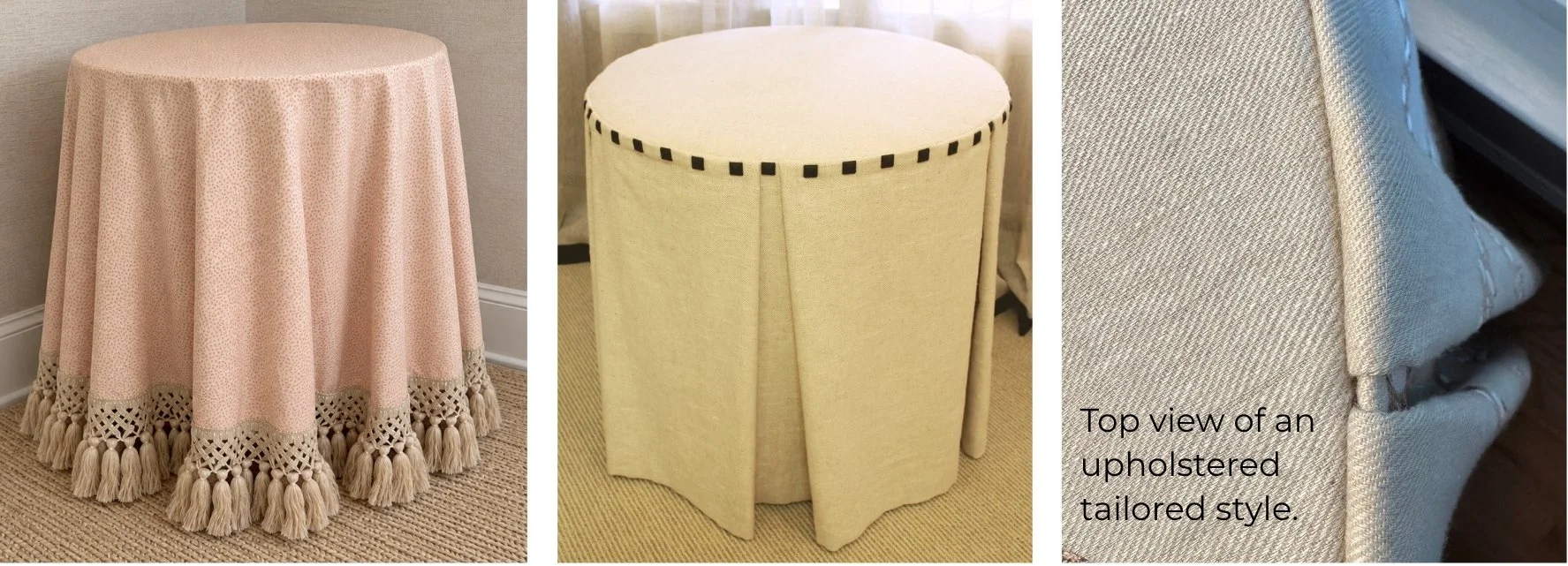
Throw styles are one large tablecloth, usually with seams needed to accommodate the width. They loosely sit on the tabletop and fall to the floor.
Tailored styles are more structural. They have a separate piece of fabric for the shaped top, with seams around the perimeter. The drop is sewn to the top, adding pleats or gathers for fullness.
At Drapery Design, we fabricate all our tailored styles by upholstering the top and stapling the drop sides to the top edge. This eliminates creep and poor seam alignment common with loose tailored styles.
For either style, add a piece of custom-shaped glass to the tabletop to protect the fabric.
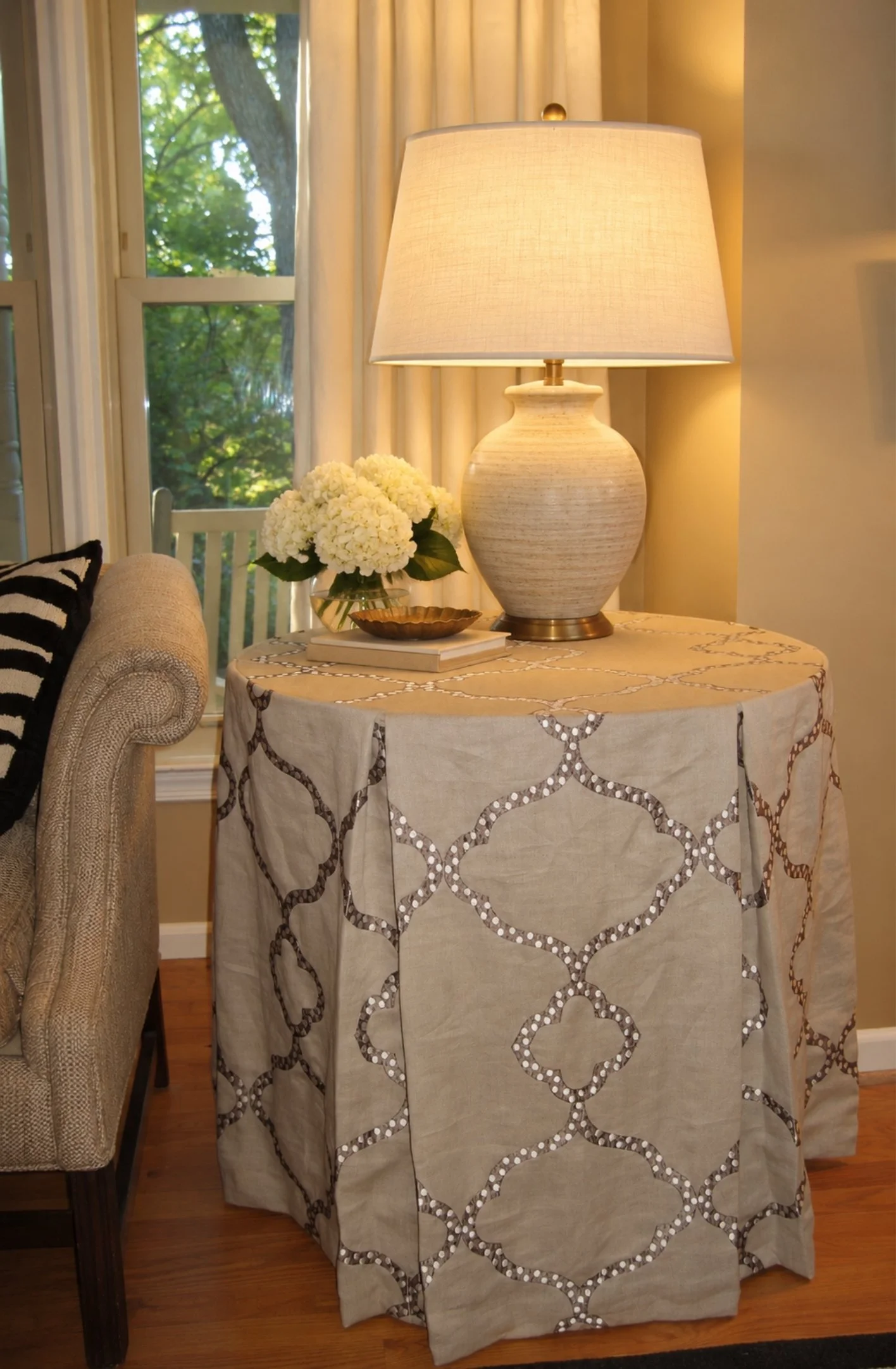
The large-scale pattern used for this table cover required thoughtful attention to pattern placement.
Types of Fabrics to Use
Table covers can get very heavy, so a light- to medium-weight fabric works better than a heavy fabric, since they should also be lined.
When selecting a patterned fabric, choose one that looks good sideways or upside down, so the pattern makes sense from all viewing angles. If the pattern has a clear up direction, it will be upside down on the opposite side of a throw cover. It can be placed right side up around the sides of a tailored cover, but it will be upside down on the top.
Pay attention to vertical and horizontal repeats to ensure they can be carefully positioned and matched across seams and pleat sections for a desirable appearance.
Embellishments such as contrast bands, decorative tapes, microcording, fringe, and tailored edge details can turn a simple table cover into a bespoke furnishing.
What type of table cover will you design?
Fabric-skirted furniture has a long history in sophisticated interiors. Designers are revisiting it today for its versatility, decorative possibilities, and ability to introduce a softer, more layered look.
A beautifully draped table is much more than a tablecloth. It is an opportunity to introduce another layer of textile artistry into a room. From a charming bedside table to an elegant entryway centerpiece, fabric-covered tables combine function, versatility, and decorative expression. With the right fabric, thoughtful proportions, and beautifully executed construction details, even the simplest table can become a distinctive custom furnishing that enhances the entire interior.
Note: All pictures are of our own fabrication projects, enhanced with some AI styling.
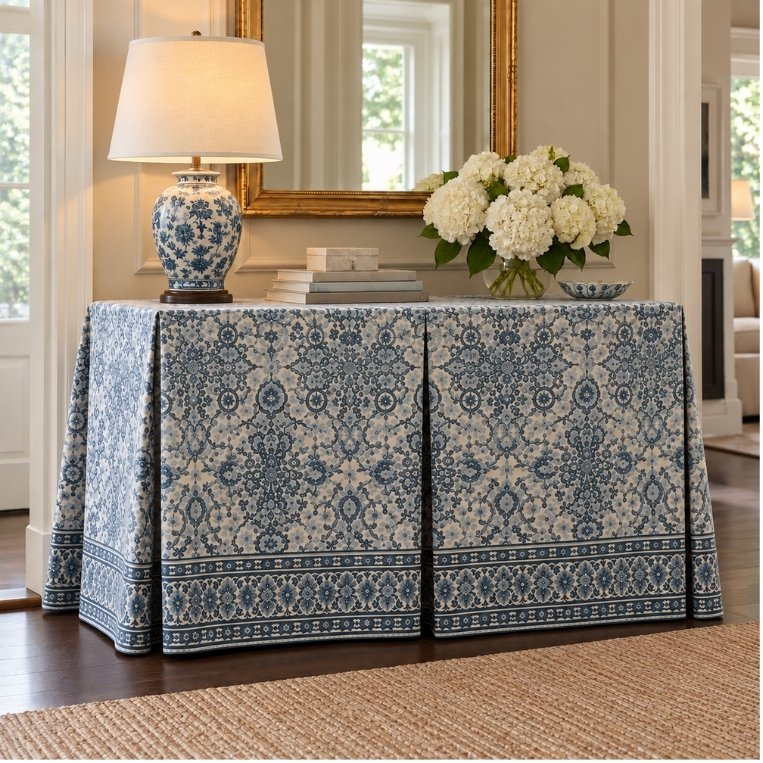
This is a rendering of a current project. It is a Lee Jofa border fabric. I will place the border at the bottom of the skirt and upholster it to a board that will sit on the current table.
Collective Member Exclusive: Behind the Scenes in the Workroom
As a member of the Drapery Design Collective, you will get an additional look at how this custom hexagonal draped table was fabricated, including the construction process and workroom photographs.
This recent project started as a round wood table and became a hexagon draped table by simply setting the upholstered board on top of the existing table.