
Meet the Pleat

DowNload the Guide
The drapery pleat is a way to control the excess fabric at the top of a drapery so it can attach to the drapery rod hardware. There are many ways to do this, but here are a few of the more popular pleats today! Regional differences in popular pleat styles and names can vary significantly. We have chosen to use the most straightforward descriptions. When placing an order with a workroom, always confirm your workroom’s terminology to ensure the final product matches your vision.
This is where the fun begins! Choosing the right pleat is a design opportunity to shape the look, movement, and fullness of your drapery.
Pinch pleat
The pinch pleat is the classic pleat that has been around for centuries. It is also commonly called the French Pleat. I have also seen it named, the Butterfly Pleat and the Fan Fold Pleat. When referring to how many folds are put into the pleat, it can be described as 2 fold or 3 fold, 2 finger or 3 finger, 2 prong or 3 prong, or double or triple.
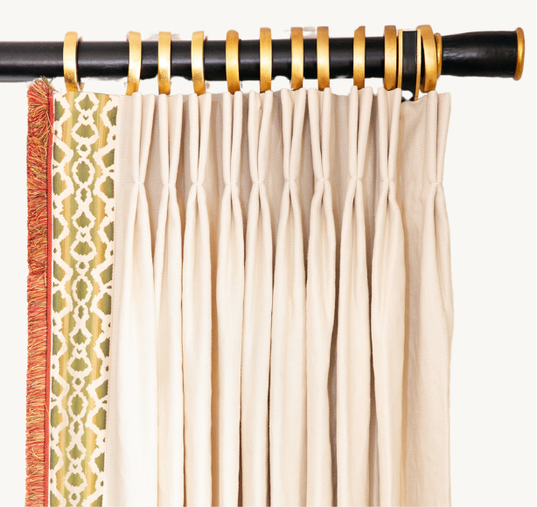
Two-fold Pinch Pleat
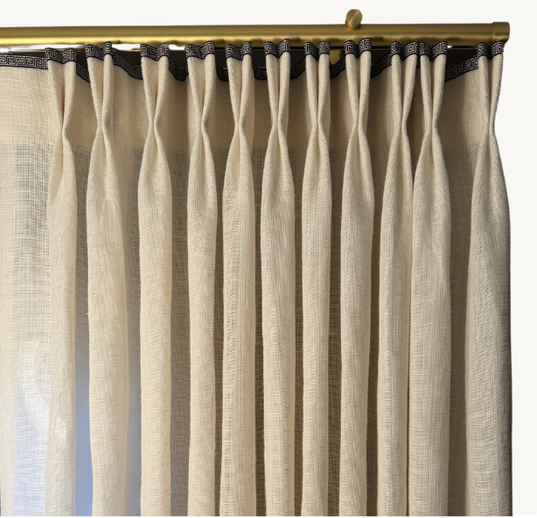
Sheer Two-fold Pinch Pleat
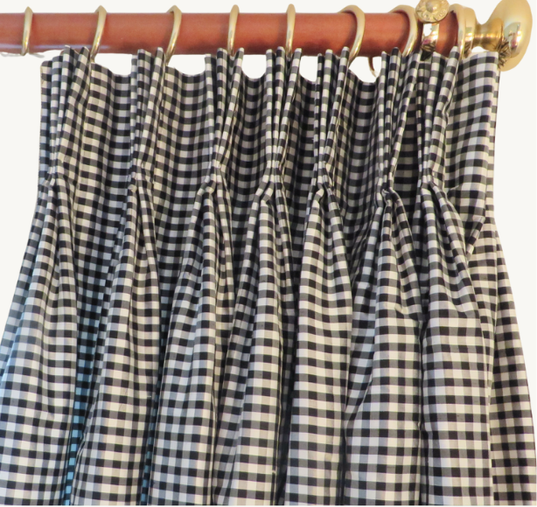
Three-fold Pinch Pleat
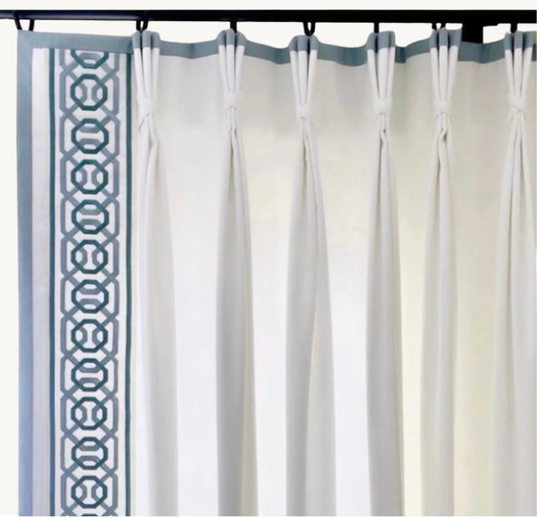
Three-fold Pinch Pleat
Tack Top Pleat
The Tack Top Pleat is also referred to as the Euro Pleat, Parisian Pleat, Tailored Pleat, Fan Pleat or Top Pinch Pleat. Again, the folds are described as fingers, prongs, doubles, or triples.
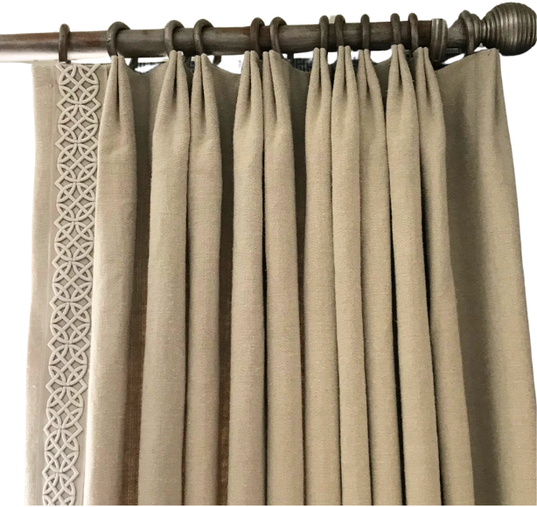
Two-fold Tack Top Pleat
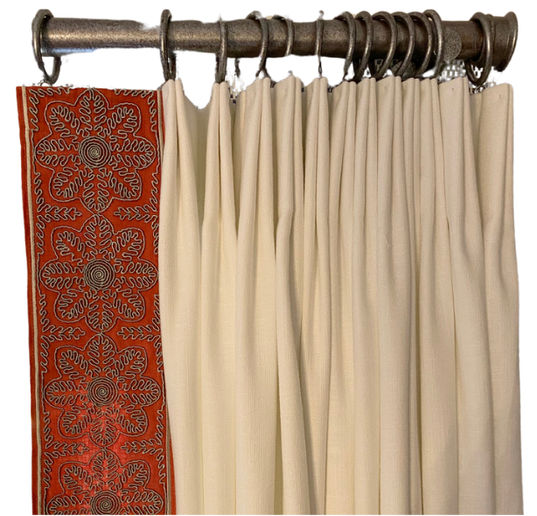
Two-fold Tack Top Pleat
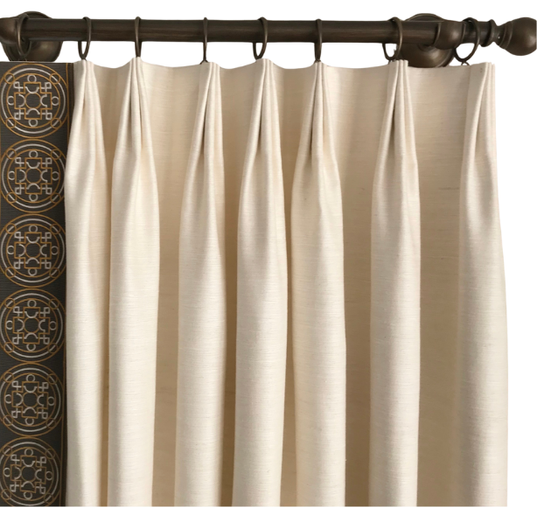
Three-fold Tack Top Pleat
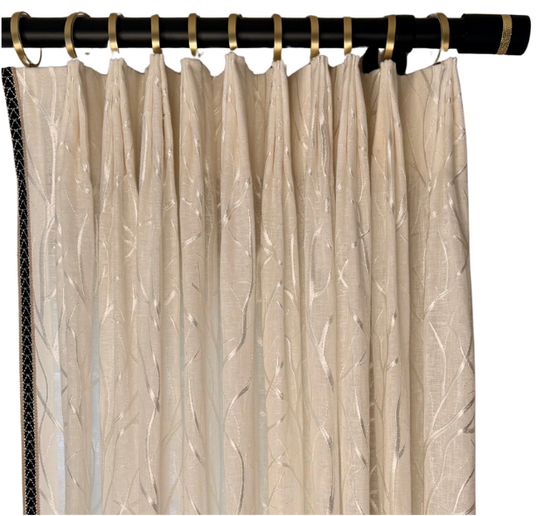
Sheer Three-fold Tack Top Pleat
Goblet and Cartridge Pleat
The Goblet Pleat is a tubular pleat that is pinch at the bottom. It is usually used in more formal settings. The Cartridge Pleat is a tubular pleat used in more casual settings.
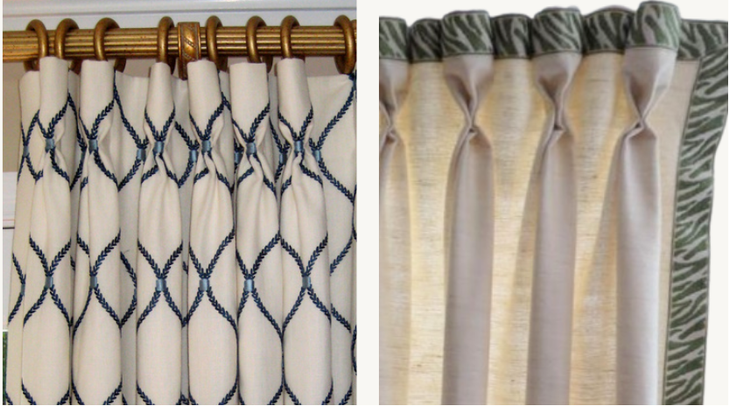
Goblet Pleat
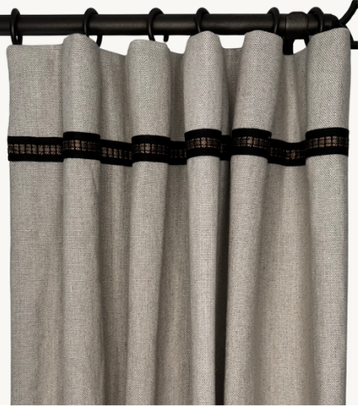
Cartridge Pleat
Ripplebox Pleat
The Ripplebox Pleat shown here is also described as the Inverted Box Pleat. They are the same pleat created with different fabrication methods and pleat spacing. The Inverted Box Peat is to be used as stationary decorative panels as it does not stack well. The Ripplebox Pleat is a great stackable pleat that can be used for draperies that close on any size window.
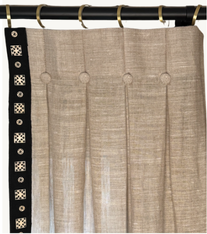
Inverted Box Pleat
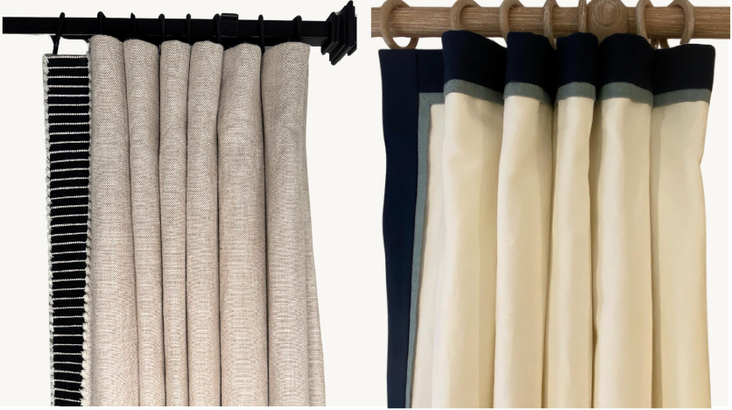
Ripplebox Pleat
Flat Panel Headers
This group is made with a flat panel with different ways of attaching the panel to the rod. Since they are flat panels with no controlled pleat, they do not stack neatly. Grommet, tab and tie tops are meant to be stationary panels. Only the ring top here will open and close easily, but it will lack fullness.
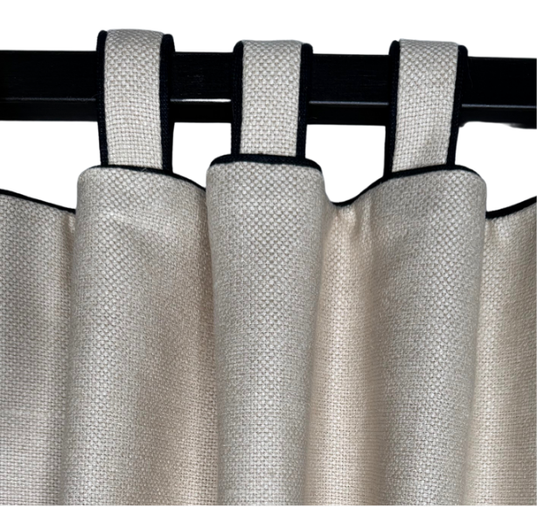
Tab Top
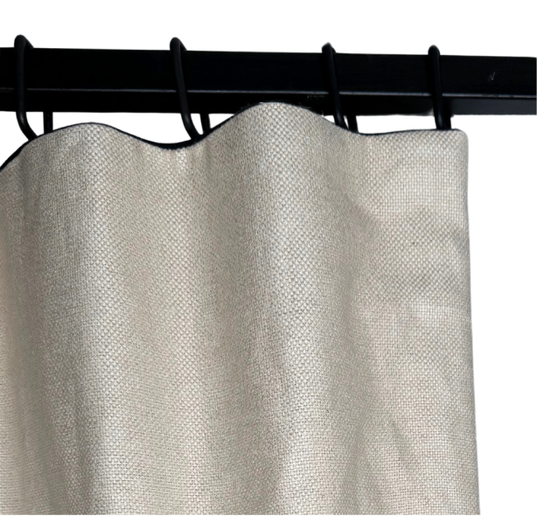
Ring Top
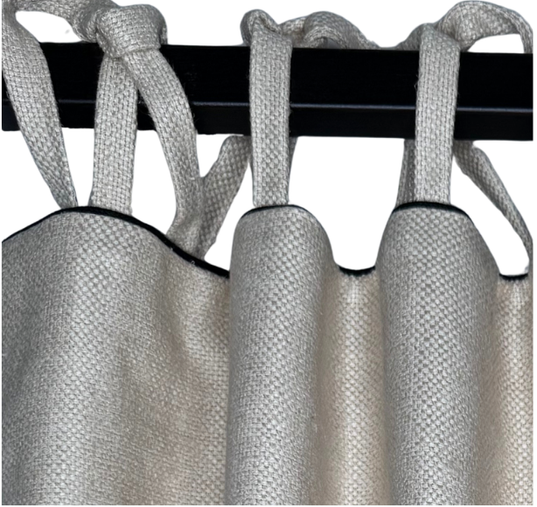
Tie Top
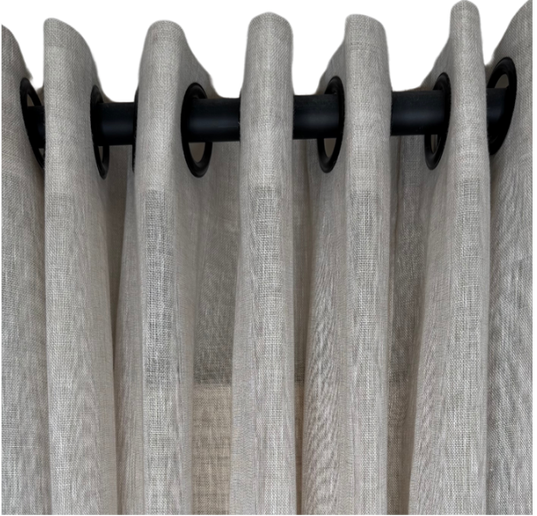
Grommet
Selecting the Pleat
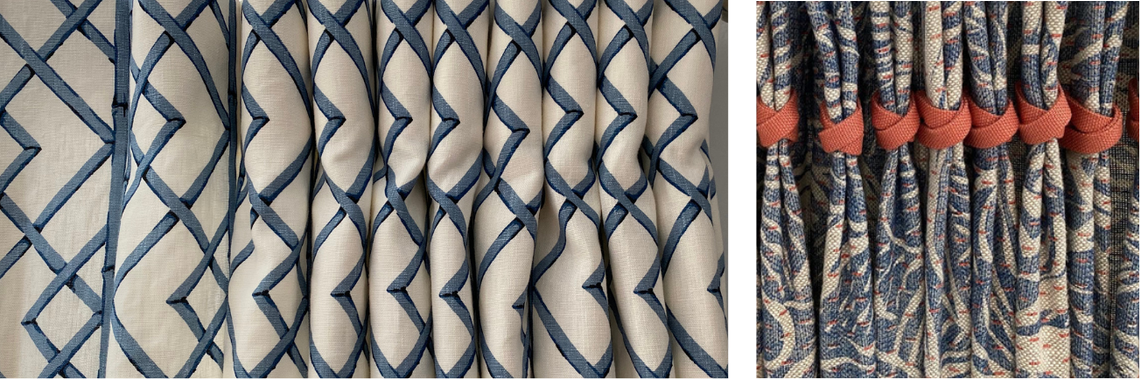
When considering which pleat to use it needs to be determined if the draperies will be stationary for decorative purposes, or will they need to close for window coverage? Any pleat can be used for stationary draperies, but operating panel pleats need to be chosen more thoughtfully.
Here are some things to consider:
How much room is there beside the window for stacking the drapery off the glass?
How thick is the fabric? Very thick fabric needs to have fewer folds in the pleat.
What type of lining is being used? This also affects the thickness of the pleat.
Does a pattern repeat need to be pleated on the pattern? This will usually require more fabric.
When you want a pleat that stacks tightly because of limited space, or because it is a very wide window, and you want to keep the stack to a minimum. Choose styles such as the Two Fold Pinch Pleat or Two Fold Tack Top Pleat. The Ripplebox Pleat or the Ripplefold are good choices for a more streamlined modern look.
This has been an overview of the most popular and timeless pleat styles available today. There are infinite variations of embellishments to add for your signature look.
Ready to create your next masterpiece? Start by experimenting with these classic pleats—and see where your creativity leads!
Note: All photography is our own workmanship.