
Understanding Blackout Lining: Designing for Comfort and Efficiency
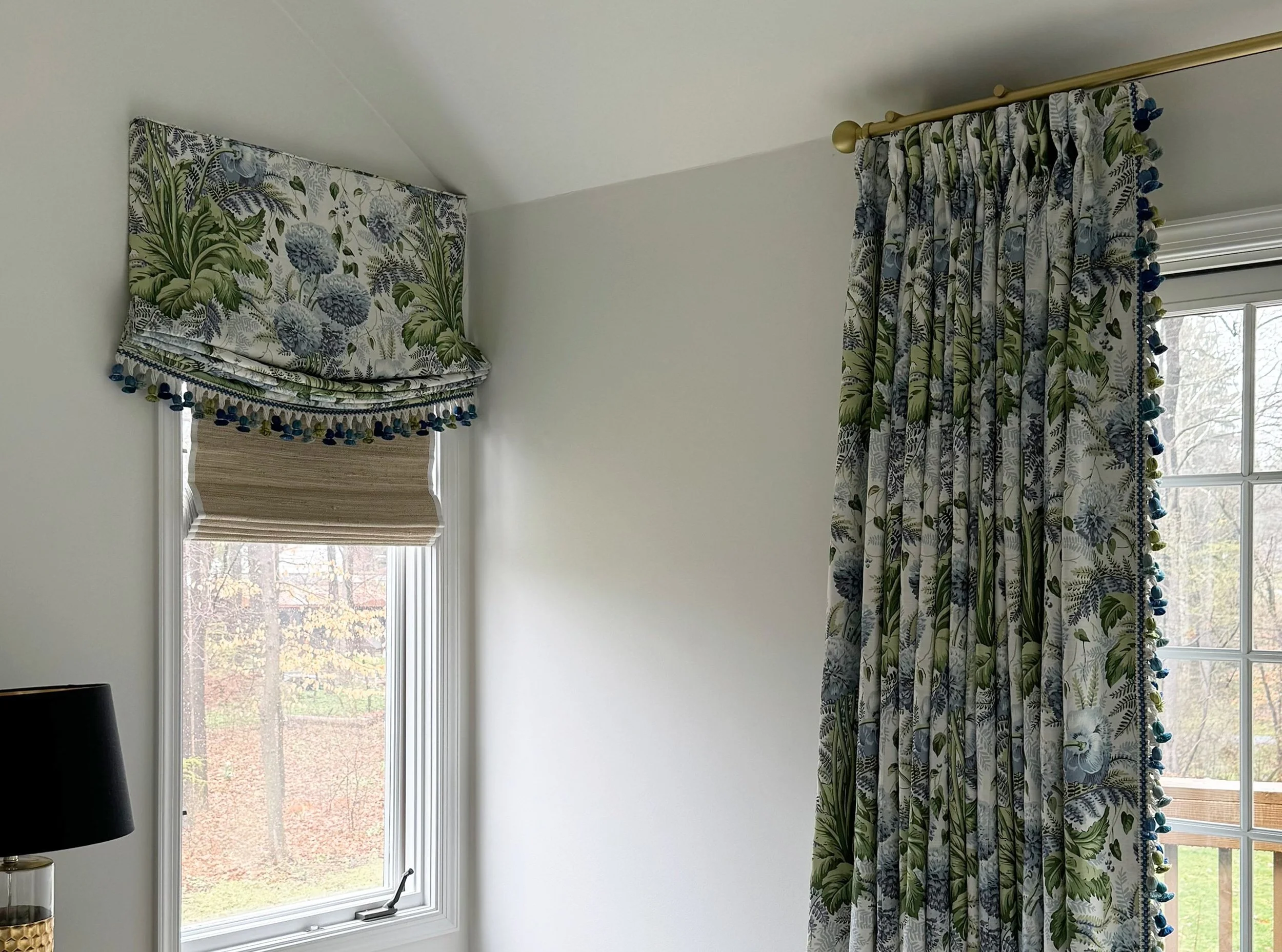
Blackout lining is intended to block the light that passes through the window treatment fabric. It does not mean it is creating an entirely dark room, but its use does give a room darkening effect.
How much of a room darkening effect is given depends on many factors.
The exposure of the window to the sun. South facing windows are the brightest.
The time of year. Summer is the brightest season with the longest daylight.
Any landscape elements outside the window, such as trees or other buildings will affect the brightness of the window when the sun is out. A lack of any objects will create a brighter room.
The type of window treatment and where it is mounted will affect how much light comes in.

Blackout Lining Variety and Similarity:
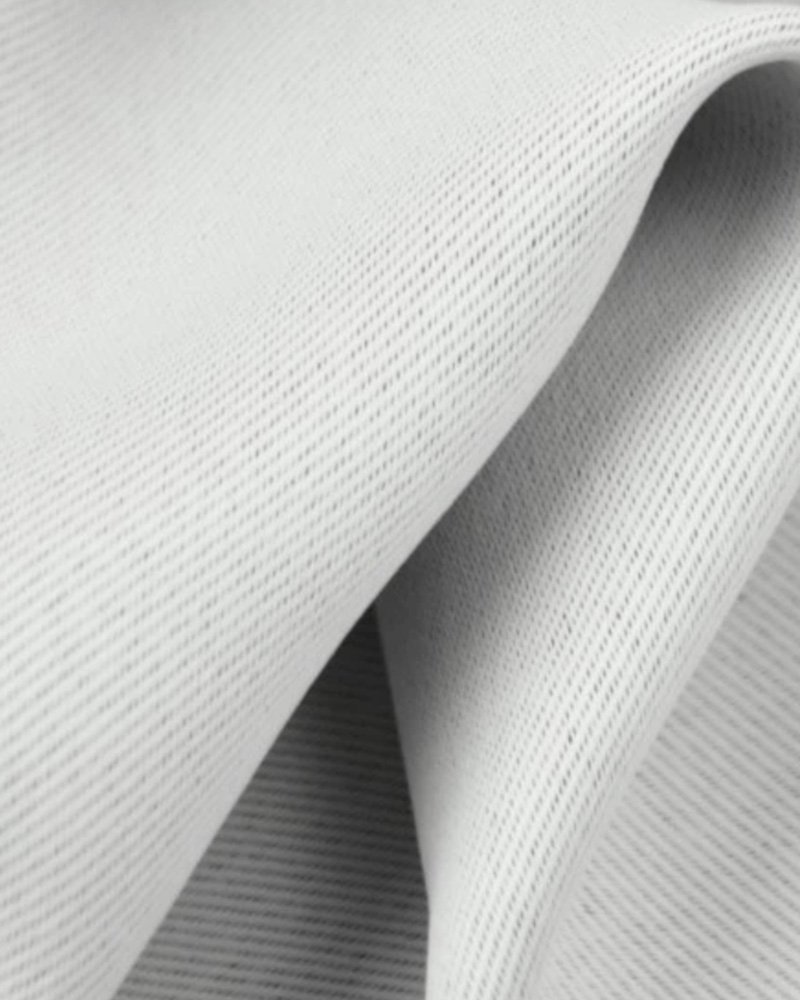
There are many varieties of blackout lining. They all have a similarity in that the core of the fabric is a black layer.
The type of blackout you see in hotel windows is a 3 pass blackout. It is made with a layer of black lining that is coated on the front and back with a layer of white foam. There are many types of finishes to the front layer to give it a more fabric like finish. These types of linings can be very stiff and heavy, so they do adversely affect the front appearance of how the drapery hangs. When they are sewn the needle creates holes in the blackout which creates pinholes of light. The workroom has several techniques to cover up those pinholes of light before it is delivered to you. There are some newer types of this lining that are more flexible and softer.
Another type of modern blackout is Triple weave blackout. Instead of using a foam spray this technique weaves a front and back layer of decorative fabric around the the black layer that becomes encased inside. These fabrics can have many textures and colors of the front layer. This is the fabric used mostly in ready made blackout draperies sold in National Chain Stores. This method creates a thicker fabric that tends to flair and does not press crisply.
Traditional Blackout:
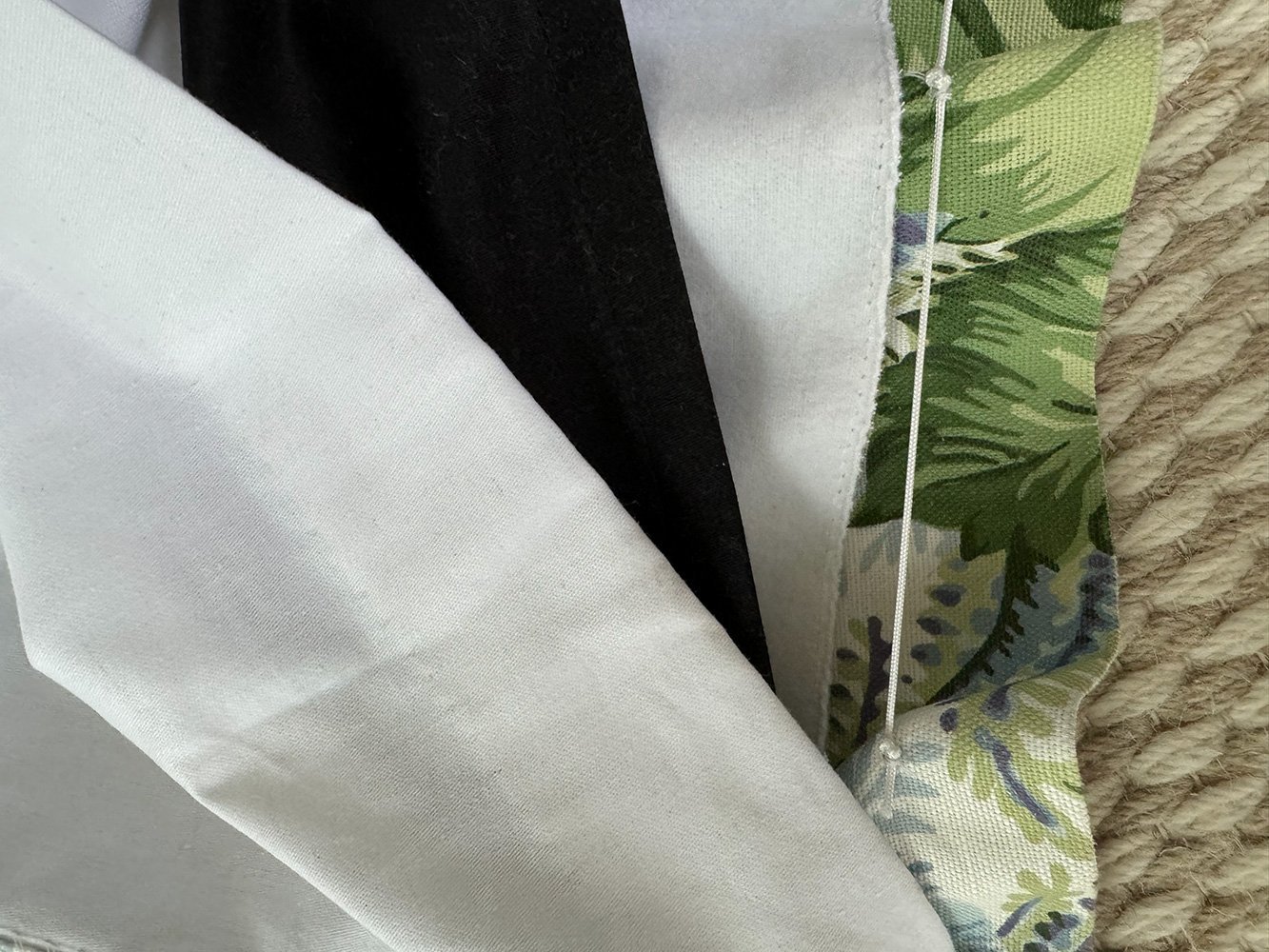
Traditional blackout called “French Blackout” is created by sandwiching a separate layer of black sateen fabric between the face fabric and the white lining. When the face fabric is a light color through which the black will disrupt the true color, a fourth layer of flannel interlining is used in front of the black layer. This is our favorite solution for blackout draperies or Roman Shades. The advantages are it does not change the way the window treatment appears from the front because it is a 100% cotton lining that drapes beautifully. It also does not have the pinhole problem of the other linings.
Benefits of Blackout Lining:
It creates a room darkening effect preferred by some people in bedrooms to help them sleep better.
It can be energy efficient to help insulate a room by preventing heat transfer through windows. The room can be warmer in the winter with this barrier and cooler in the summer, so it can help lower energy costs.
It gives sun fading protection to floors, carpets and furniture near a window.
It can act as a sound barrier for noise reduction.
It can help control annoying sun glare, particularly on a TV screen.
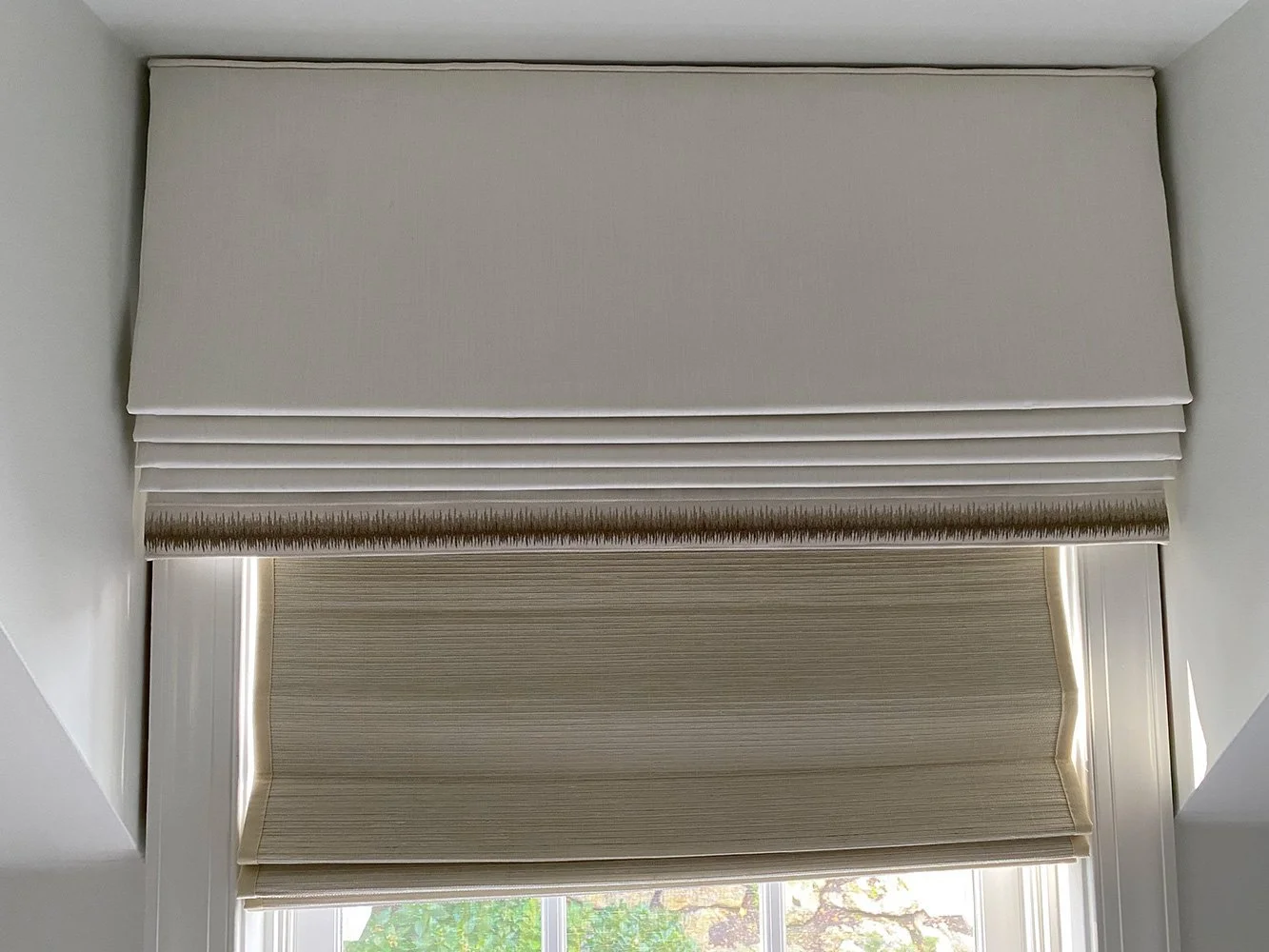
It is also used in stationary valances to even out the tones of the face fabric.
Customizing Blackout Linings:
Whether on not to use blackout linings is a personal decision that the person living in the room needs to make. Many people have no desire or need to have a room darkening window treatment. The designer needs to ask for personal preferences, particularly in a bedroom, of the person who will be sleeping there. Some people don’t even close their window treatments at night and others need to create a dark cave effect to sleep comfortably. A designer should ask the customer what their preference is for light levels in the room particularly in the morning. That will help guide the designer to select the correct window treatment and lining for that project.
The designer should also consider the orientation of the room to the sun. Use the compass app on your phone to find out if the windows are facing north, east, south or west. An east facing window will get the rising sun and more morning light. A west facing window will get the setting sun and potentially more sun glare.
Also consider the exterior surroundings. A window with many trees, a porch or large roof overhang, or close by buildings blocking the sun will have less light intensity than a window with none those elements. The sun is particularly strong for coastal homes and blackout should always be considered here.
The Design of Darkness:
Once the client preferences have been determined, a designer can design a window treatment that satisfies the needs for the level of darkness in the room.
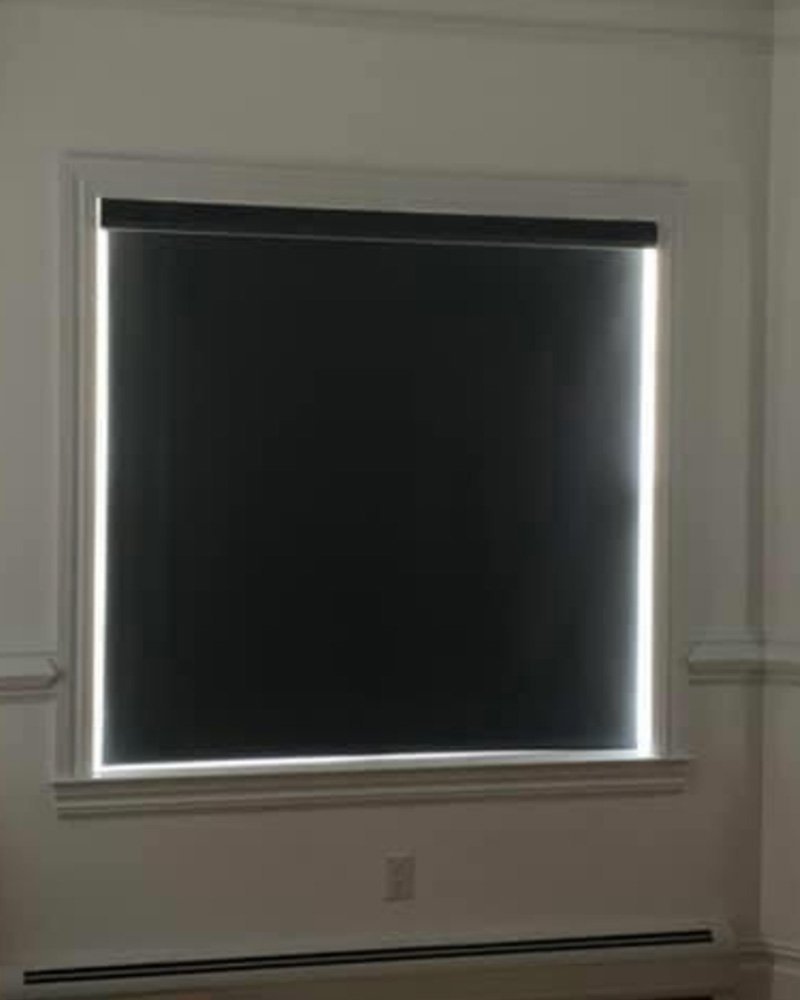
All window treatments with blackout linings have a halo of light around them during daylight hours. Considering which way that halo falls and the furniture placement in a room can inform the design chosen.
A drapery treatment with returns to the wall will have the halo effect of light bleeding from the top and bottom edges of the drapery. The sides will have varying amounts of light escaping depending on how deep the baseboard casing kicks out the drapery at the bottom. The draperies shown below also have a tassel trim on the leading edge that creates a light gap in the center. A decorative tape band on the leading edges would be a better choice for blackout draperies.
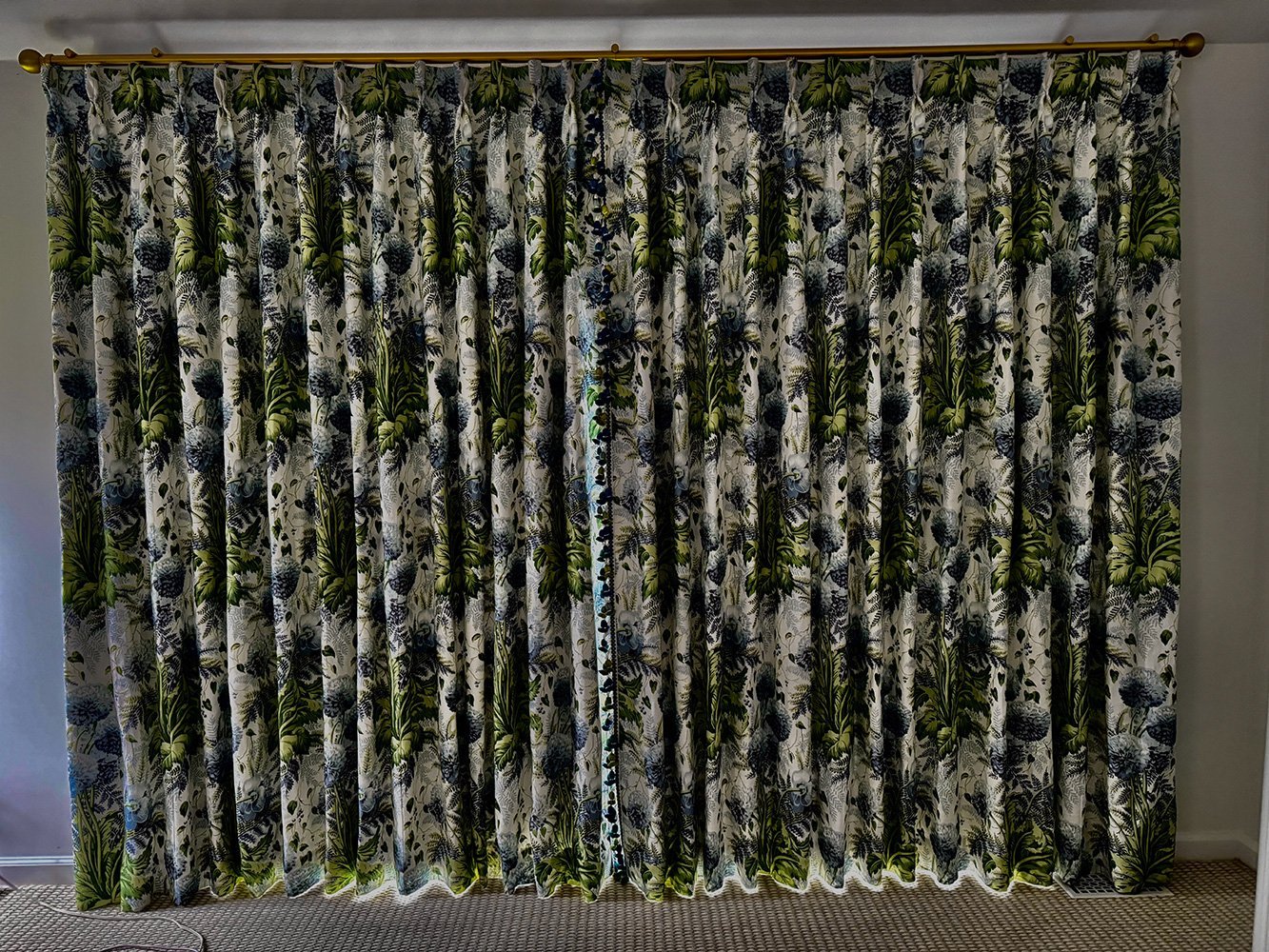
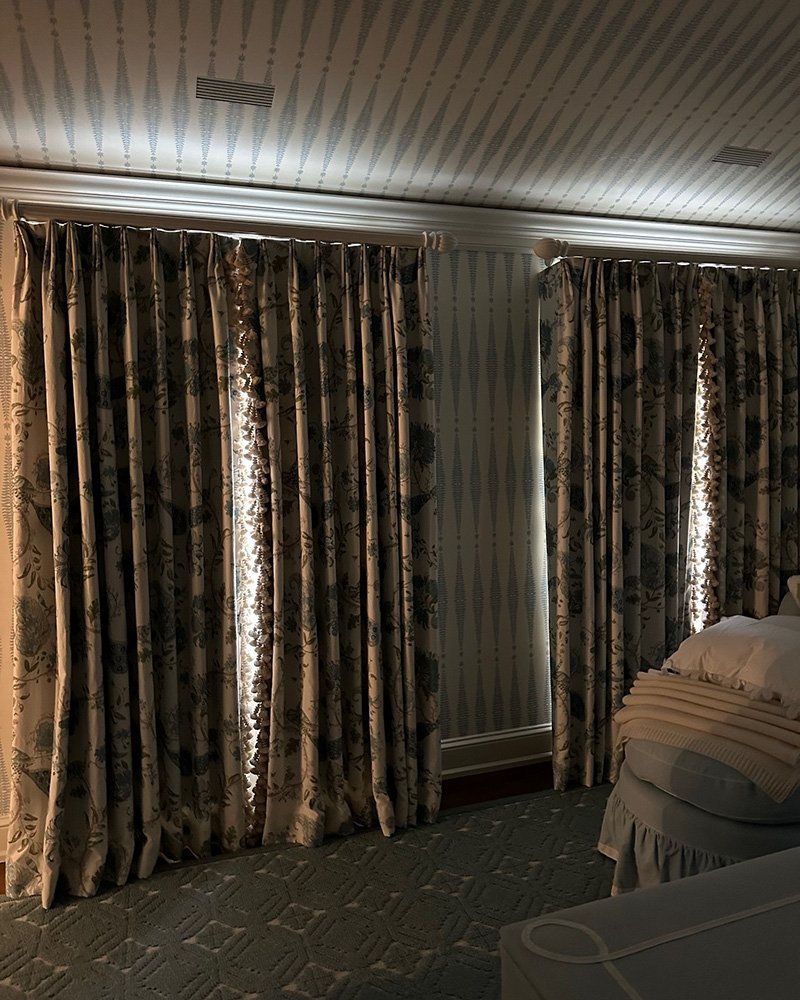
The drapery on the left has a tight center closure, but there is always light that escapes from the top of a blackout lined drapery.
The same drapery is shown without blackout lining, so in addition to the halo effects there is also light coming through where the window is placed. However the room still becomes sufficiently dark when the draperies are closed.
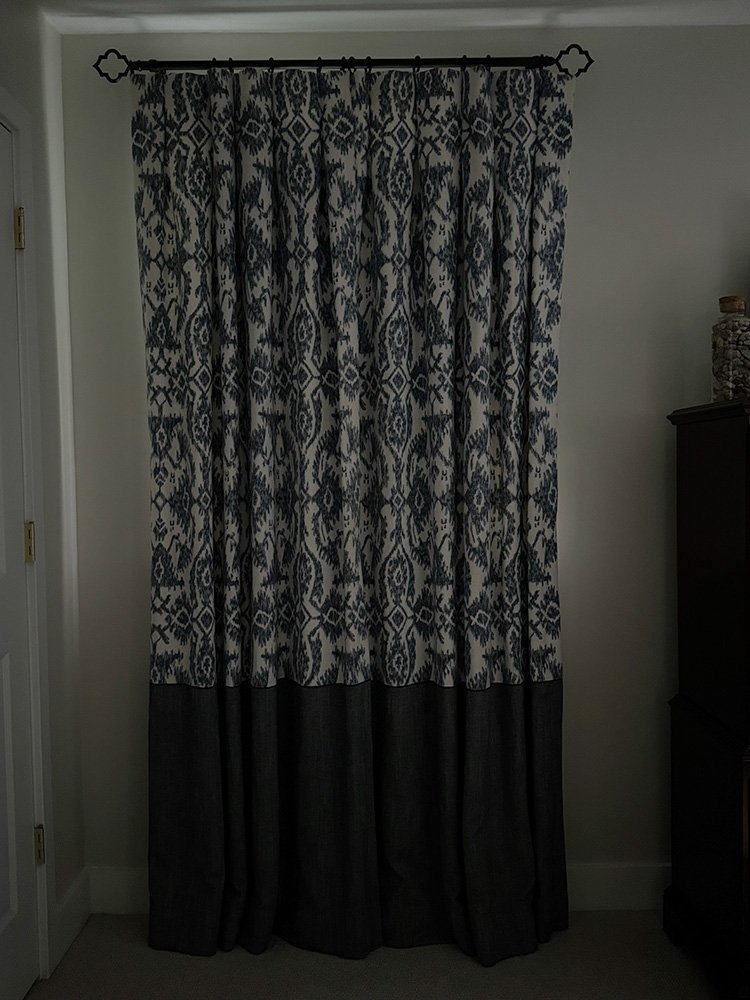
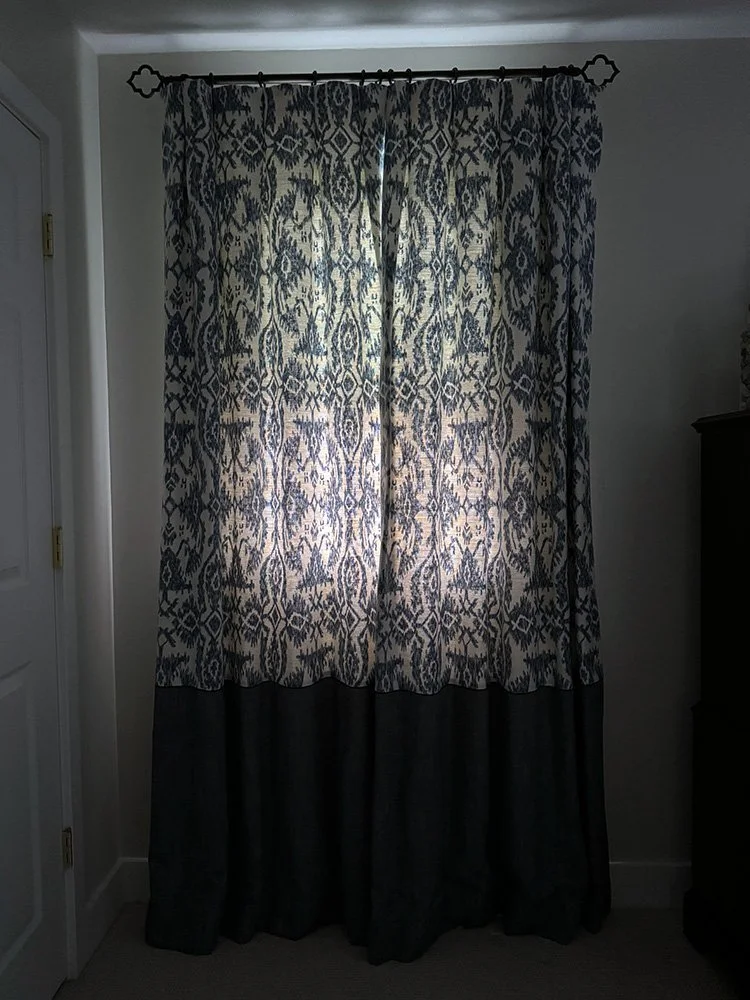
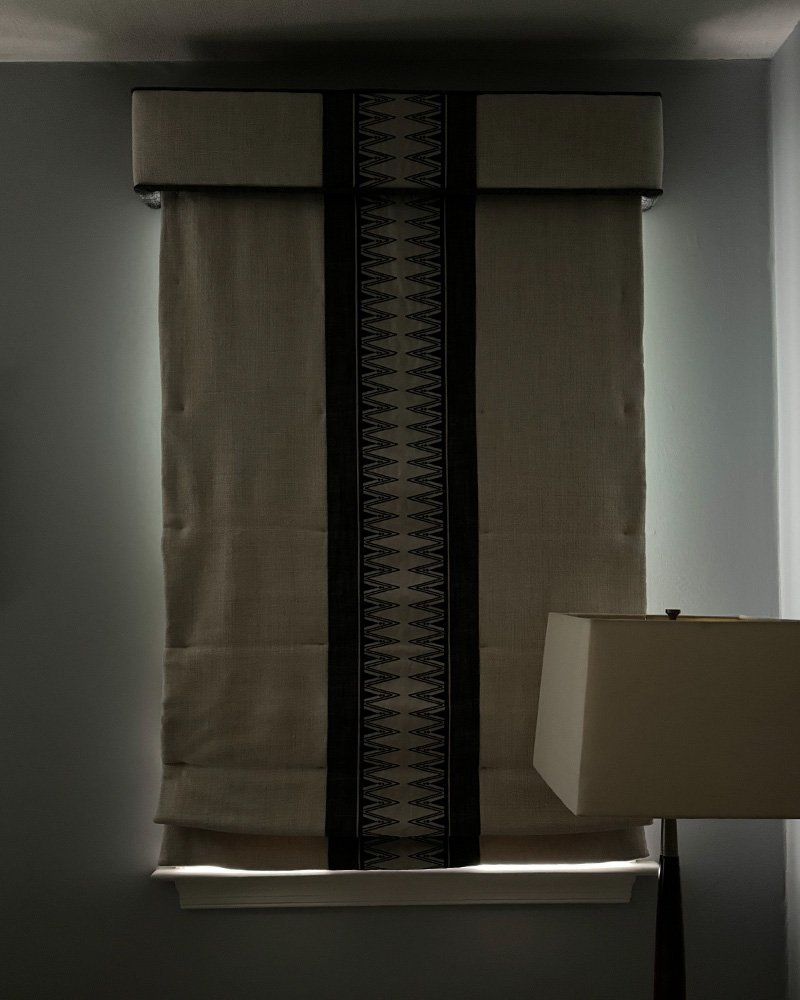
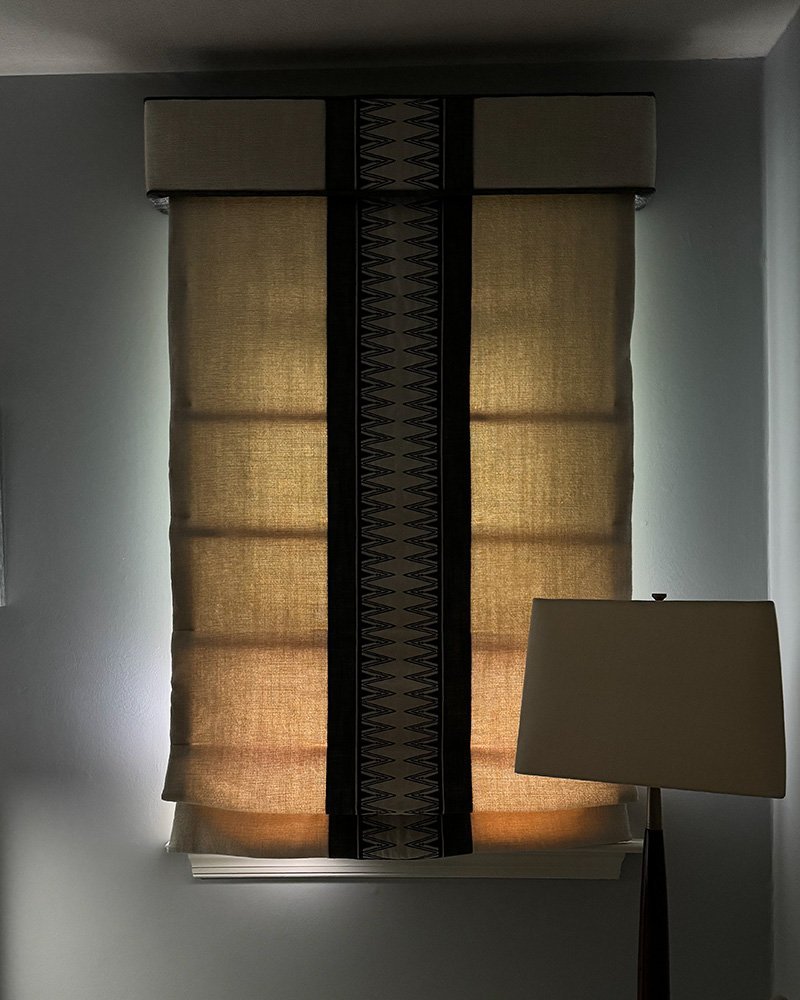
A Roman Shade treatment will have the light bleeding from the sides of the treatment, while the top light will be blocked by the mounting board. This shows the same treatment with and without blackout lining.
Design Considerations:
Some things for the designer to consider when specifying a window treatment where blackout is needed.
A blackout drapery is usually going to give you more light blocking effect than a Roman shade or any hard blind treatment like roller or cellular shades or blinds/shutters.
If black out lined draperies do not create enough darkness for a client, then layer in a blackout lined shade mounted inside the window. This will greatly reduce the halo effect at the top of the drapery. The drapery will reduce the halo effect on the sides of the shade.
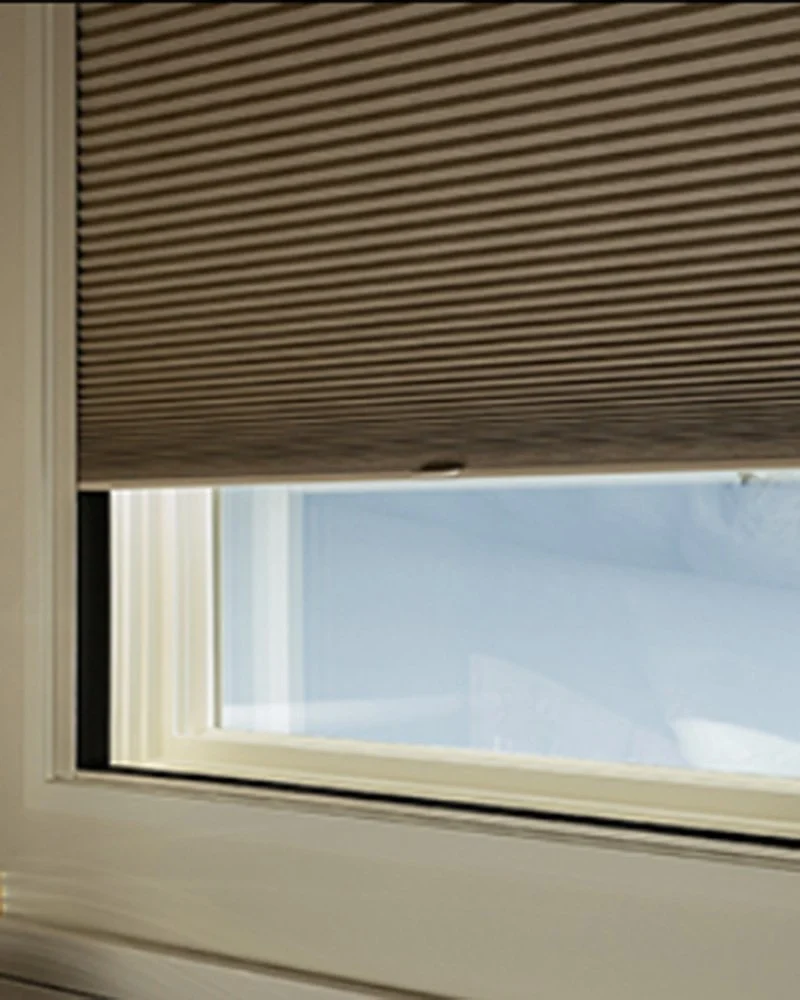
There is a product that has side channels for a cellular shade. This is the tightest light block you can get, but there is still light bleed at the top and bottom of the track.
Shutters and wood blinds that seem solid and would offer good light control actually have extra light bleed between each slat.
Roller shades inside mounted have a larger side light gap than cellular shades because the roller is mounted with end brackets while a cellular shade is mounted with top brackets, so it has a tighter fit on the sides.
Try furniture placement in the room to minimize a direct eye sight line to the bothersome light halo.
As a final resort you can work with your builder to put in a pocket over the windows for headrails or rods or build wood channels into the side casings to help block the light gap.
Note: All images showcased are authentic works created by Drapery Design